RESOURCES

Redefining Early Mobility in an Awake and Walking ICU

The history of bedrest, inter-organ connection between the muscles and other systems, and the impact of muscular atrophy on critical illness are discussed. The effect of ICU-acquired weakness and diaphragm dysfunction on the rates of death, disability, tracheostomy, and time on the ventilator is revealed.

In this talk, your audience will hear about survivors who discuss their rehabilitation and the life-long impact of ICU-acquired weakness. Research on the safety, feasibility, and efficacy of early mobility is also shared. The science behind the benefits of each level of mobility is explained.

After participating in this presentation, ICU team members will understand mobility as a life-saving intervention. Clinicians will learn to prioritize prompt mobility as a part of best practices.

About the Author, Kali Dayton

Kali Dayton, DNP, AGACNP, is a critical care nurse practitioner, host of the Walking Home From The ICU and Walking You Through The ICU podcasts, and critical care outcomes consultant. She is dedicated to creating Awake and Walking ICUs by ensuring ICU sedation and mobility practices are aligned with current research. She works with ICU teams internationally to transform patient outcomes through early mobility and management of delirium in the ICU.

LEARN MORE

As an RN in the Medical-Surgical ICU at the hospital I work at, I began my interest in ICU Liberation through an Evidence-Based Practice project.

While I was initially grabbed by what the literature has to say about over-sedation and patient outcomes, it wasn’t until I discovered Kali’s Walking Home From The ICU podcast that a culture of sedationless ICU care sounded tangible. The group I worked with on the project was both inspired, devastated, and intrigued by the stories Kali illuminates on the podcast, and we were able to bring her to our hospital for a virtual Zoom Webinar, where she presented on the practices in the Awake and Walking ICU.

This webinar was an incredible way to draw attention toward this necessary culture shift as Kali shared stories of patients awake and mobile in the ICU despite the complexity of their illness. The webinar inspired our final draft for the new practice guideline on analgesia and sedation management in the ICU, and since then we have seen intubated COVID patients playing tic tac toe on the door with staff members on the other side, taking laps around the unit, performing their own oral care using a hand mirror, and most importantly, keeping their autonomy and integrity while fighting to leave the ICU to resume the life they had before coming in.

Nora Raher, BSN, RN, MSICU
Virginia, USA

READ MORE TESTIMONIALS >

DOWNLOAD THIS VALUABLE FREE REPORT

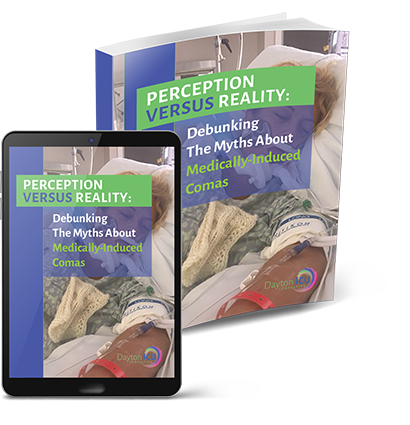
Perception Versus Reality: Debunking The Myths About Medically-Induced Comas

By clicking the Subscribe button, you agree to this site's Privacy Policy. Your information is always kept safe.