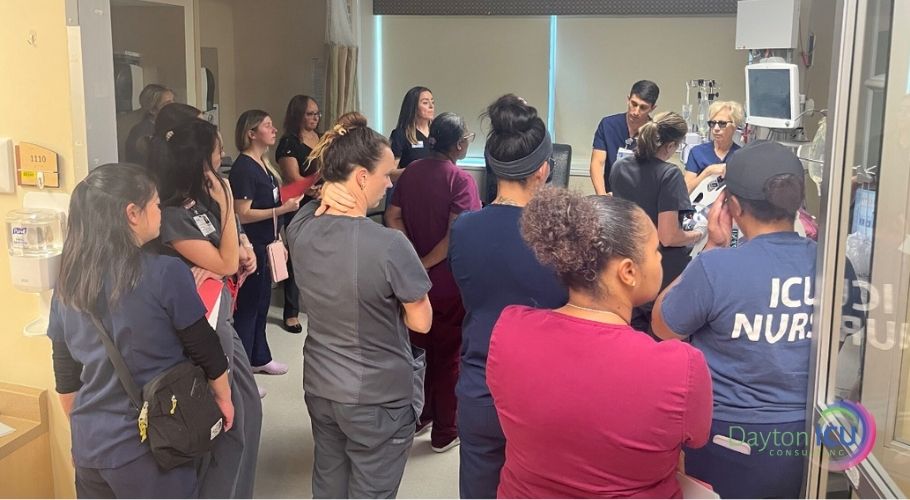
Most ICU culture change begins with someone who sees that patients could receive better care.
It may be a nurse who understands the consequences of deep sedation, a physical therapist who sees patients losing strength every day they remain immobile, or any other clinician who recognizes how the ABCDEF Bundle can improve survival and recovery.
In most circumstances, this person becomes the champion.
They share research, question routines, advocate during rounds, and encourage colleagues to do things like reduce sedation, prevent delirium, involve families, and mobilize patients earlier.
Their passion can start an important conversation.
But one passionate clinician cannot change an entire ICU all by themselves.
Lasting ICU culture change requires shared knowledge, practical training, interdisciplinary collaboration, supportive workflows, clear expectations, and visible involvement from leadership.
Because when hospitals rely too heavily on one champion, they place responsibility for a system-wide problem on someone who may not have the authority, expertise, or resources to solve it.
ICU Champions Play an Important Role
Champions of the ABCDEF Bundle often help ICU teams recognize practices that have become so routine that few people question them.
They may ask why every mechanically ventilated patient receives deep sedation, challenge the assumption that mobility must wait until after extubation, or point out that delirium, weakness, cognitive impairment, and post-ICU trauma are not inevitable consequences of critical illness.
Champions can also make research more relevant to daily patient care, as evidence about ICU-acquired weakness becomes harder to overlook when the team sees a patient lose the strength to sit, stand, or return home.
They can model evidence-based care, help colleagues build confidence, identify barriers, encourage interdisciplinary discussion, and share patient successes.
These contributions are incredibly meaningful.
But the problem begins when hospital leadership expects that one champion to come up with their entire strategy for changing ICU culture.
ICU Culture Is Bigger Than One Person
ICU culture develops through the beliefs, habits, expectations, and routines shared across the unit.
It influences what clinicians consider safe, while shaping which practices feel normal and which feel risky.
What’s more, it affects whether team members speak up during rounds, whether families participate in care, and whether sedation reduction or early mobility receive consistent attention.
At the same time, culture also develops through what the organization reinforces.
What do leaders expect from the team? What does the team discuss during rounds? Which outcomes does the ICU measure? And how does the unit respond when a patient becomes agitated?
One clinician cannot control all these conditions.
A champion may demonstrate better care during their own shift, but patients may receive completely different care when another clinician, physician, or team takes over.
In these situations, the ICU itself may have a champion, but the system is still supporting the old way of doing things.
Champions Often Have Influence Without Authority
Many ICU champions hold front-line clinical roles.
They may have substantial clinical knowledge but lack the authority to change things like protocols, documentation systems, staffing models, education requirements, or rounding structures.
They can recommend a different approach to sedation, but they can’t always change the expectations that guide things like prescribing and nursing practices.
They can encourage early mobility, but they can’t independently ensure that staffing, equipment, and interdisciplinary support are available.
And they can advocate for delirium prevention, but they can’t create consistent assessment and response processes across every shift.
When a hospital fails to address these barriers, the ICU champion must repeatedly try to persuade colleagues to follow practices that the wider system does not yet support.
One Person Cannot Educate an Entire ICU
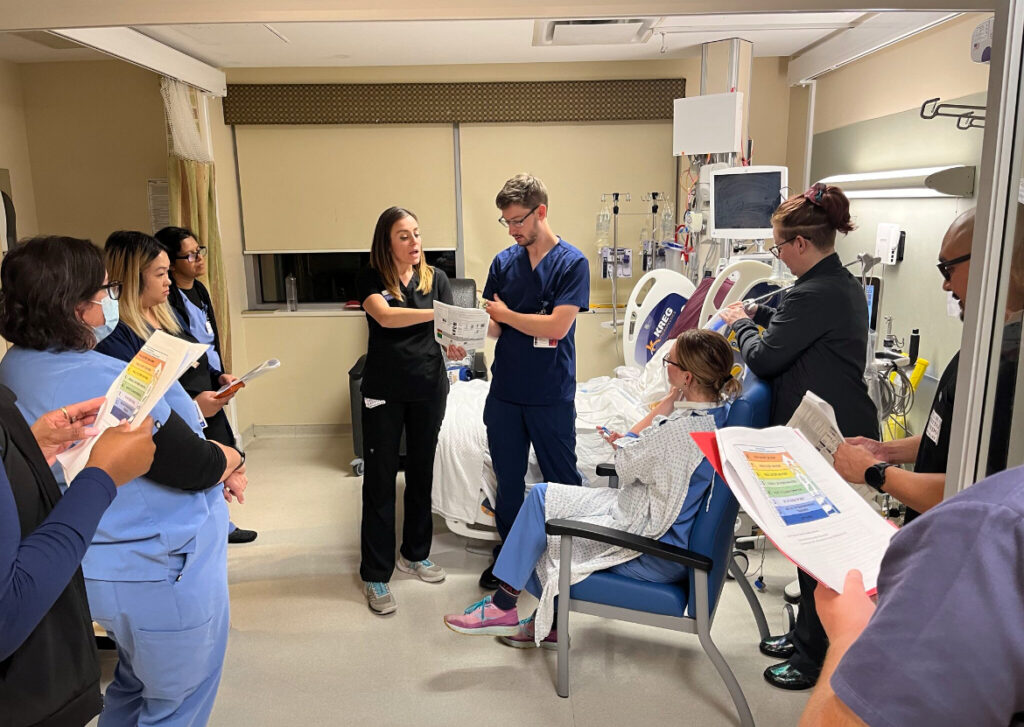
An ICU includes many disciplines, shifts, roles, and levels of experience, and each discipline needs to understand its role.
ICU teams also tend to change constantly, as new employees arrive, travelling clinicians rotate through, and experienced staff leave.
As such, one ICU champion can’t begin to provide all the education required to maintain consistency throughout this environment.
And even when champions share articles or give presentations, that information alone may not change what happens at the bedside.
Clinicians need practical guidance for applying the ABCDEF Bundle to patients with ventilators, vasopressors, invasive lines, agitation, weakness, neurological concerns, or other clinical complexities.
They also need opportunities to ask questions and work through concerns without feeling judged.
In any case, sustainable ICU culture change requires formal, interdisciplinary education that reaches the whole team and continues over time.
Familiar Routines Can Override New Knowledge
Many ICU clinicians agree with the evidence behind lighter sedation, delirium prevention, early mobility, and family involvement.
But agreement doesn’t always lead to significant change or consistent practices.
For instance, when workloads rise, teams may return to familiar routines.
When an awake and ventilated patient becomes distressed, deep sedation may feel easier and safer. And when mobility requires coordination across disciplines, postponing it may seem more practical.
These decisions often make sense within the pressures of the moment.
And that’s why culture change cannot depend on telling ICU clinicians to simply try harder.
Teams need clear sedation and mobility goals, reliable communication during rounds, and established processes for assessing delirium, managing agitation, coordinating equipment, and determining appropriate mobility.
Moreover, they also need enough experience with awake and mobile patients for these practices to become familiar.
And until that happens, established routines will continue to shape care.
Hierarchy Can Limit the Champion’s Impact
ICU culture change depends on clinicians being able to share their expertise across disciplines.
And whether those observations influence care often depends on the rounding culture and hierarchy within the unit.
For example, some clinicians hesitate to question a plan developed by someone with more authority, while others may stop speaking up after their concerns receive little attention.
At any rate, a champion cannot solve that problem through persistence alone.
Leaders must create an environment where every discipline can contribute meaningful clinical information regarding things like sedation, delirium, mobility, communication, sleep, and family involvement.
Interdisciplinary input should never depend on whether one person feels confident enough to challenge the room.
Unsupported Champions Can Burn Out
Champions often become deeply invested in improving patient care.
They see the consequences of unnecessary sedation and immobility, and understand that patients may face weakness, cognitive changes, psychological trauma, prolonged rehabilitation, and loss of independence after the ICU.
When change doesn’t happen, they may feel responsible for missed mobility opportunities or patients who remain deeply sedated.
They may even spend their own time gathering research, teaching colleagues, and trying to gain leadership support.
But over time, repeated resistance can create frustration, exhaustion, and moral distress.
At this point, some champions simply stop advocating, while others just leave the unit entirely.
And that kind of burnout can stop ICU culture change before it’s even begun.
What Lasting ICU Culture Change Requires
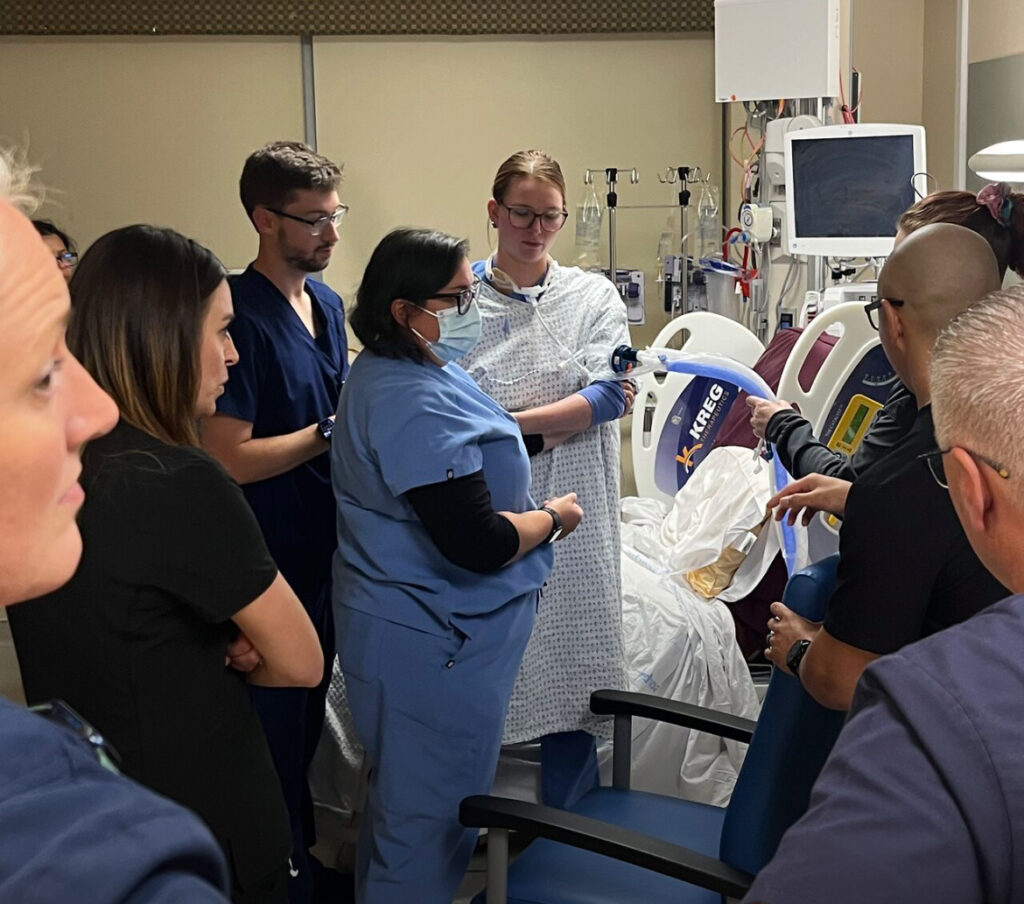
A champion can help a team recognize the need for change, but recognition is only the beginning.
To build a true Awake and Walking ICU™, the entire unit must create an environment where clinicians can apply new practices consistently, even when the unit is busy, staffing is limited, or a patient presents unexpected challenges.
Leaders must address the practical barriers that keep teams from applying what they know, and they must also make the desired standard of care visible in education, rounds, documentation, protocols, staffing decisions, and ongoing review.
In my experience, when the whole team understands why the change matters, knows what to do at the bedside, and trusts that leadership will support the work, that’s when ICU culture truly starts to shift.
Visible Leadership Support
Leaders must clearly communicate that evidence-based sedation, delirium prevention, mobility, interdisciplinary collaboration, and family involvement are clinical priorities.
Staff need to know this work is not an optional project associated with one enthusiastic colleague.
Leadership support also requires action, as leaders must help resolve barriers involving staffing, scheduling, equipment, education, documentation, and coordination.
What’s more, they must set aside time for training and participate in reviewing outcomes.
Shared Interdisciplinary Education
Every discipline needs a common understanding of why ICU practices must change.
Every member of the team should understand how unnecessary deep sedation and immobility affect delirium, muscle loss, ventilator duration, length of stay, discharge destination, cognitive function, psychological health, and quality of life.
They also need practical education about how to provide care differently.
This education should accurately reflect the protocols found in the ABCDEF Bundle, while also considering the realities of the ICU in question, including its patient population, workflows, staffing concerns, and perceived safety risks.
Bedside Skills and Practical Support
ICU teams need opportunities to build confidence.
They may need training for things like communicating with intubated patients, coordinating mobility around invasive devices, responding to agitation without automatically increasing sedation, or determining when a patient can safely participate in activity.
And these skills will develop over time through practice, coaching, and repeated application.
Workflows That Reinforce the Desired Practice
Better care must become part of your ICU’s daily structure.
As such, rounds should include clear discussions about sedation goals, spontaneous awakening and breathing trials, delirium, mobility, sleep, family involvement, and barriers to progress.
Documentation should also support these conversations, and roles should be clear.
Who assesses readiness for mobility? Who identifies barriers? Who coordinates the team? Who follows up when an opportunity is missed?
You need to know the answers to all these questions because when responsibilities remain vague, essential care can be delayed, even when everyone agrees it should happen.
Psychological Safety
Clinicians need to feel safe raising concerns and offering their expertise.
A nurse should be able to question unnecessary sedation, a physical therapist should be able to recommend mobility, and a respiratory therapist should be able to discuss readiness for extubation.
Leaders, on the other hand, should respond with curiosity, support, and respect.
Teams often focus intensely on things like falls, self-extubation, and line removal, while giving less attention to the harm caused by deep sedation, restraints, delirium, and prolonged immobility.
But when you provide psychological safety to raise potentially controversial concerns and ask pointed questions, it allows clinicians to examine all these risks openly and make better decisions together.
Measurement and Accountability
ICUs need to know whether practices are changing.
Teams may track sedation levels, delirium assessments, mobility levels, ABCDEF Bundle completion, ventilator days, ICU length of stay, discharge destinations, or differences between shifts.
But the purpose should not be to punish clinicians.
Measurement should help teams identify where practices break down, understand why barriers persist, and determine which support will make improvement possible.
Stop Asking Champions to Carry the System
When a hospital and its leadership take ownership of ICU culture change, the champion can serve in a healthier and more effective role.
They can offer clinical insight, help educate their peers, identify emerging barriers, share front-line feedback, and help maintain momentum.
Moreover, they can become part of an interdisciplinary leadership group rather than the sole person responsible for progress.
The goal should never be to find one person who can persuade everyone else to change.
It should be to create a team that understands the evidence, trusts one another, has the skills to apply better care, and receives consistent support from leadership.
All things considered, ICU champions deserve recognition for questioning routines and pushing for better patient care.
Their advocacy can help an ICU recognize what needs to change.
But one champion’s passion cannot replace training, interdisciplinary collaboration, practical workflows, psychological safety, accountability, and leadership support.
Hospitals create lasting ICU culture change when they turn individual advocacy into a shared standard of care.
And that’s how a conventional ICU becomes an Awake and Walking ICU™, where patients have a stronger chance to survive, recover, and return to their lives with more of their physical, cognitive, and psychological function preserved.
Your ICU champion should not have to carry culture change alone.
Book a free consultation to explore how we can help your team build the training, workflows, and support needed to create lasting change in your ICU.