SUBSCRIBE TO THE PODCAST


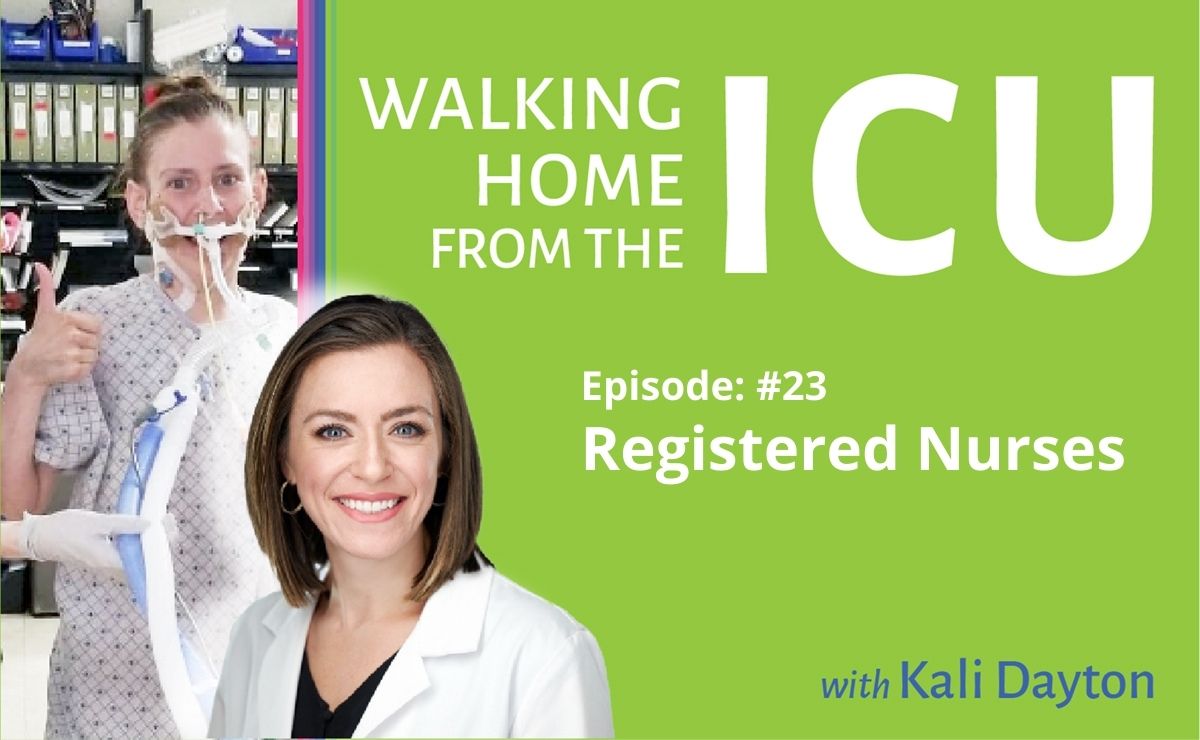
In this episode, Kali talks with Brandy, an RN who shares with us why she is passionate about keeping brains and bodies strong during critical illness and reveals how humanizing the ICU has impacted her career.
Episode Transcription
Kali Dayton
Brandy, thank you so much for being willing to talk about this with us. I’m really excited. So, as I’ve talked to nurses online about the fact that we don’t put our patients in comas, I’ve been told that I was “inhumane and ethical, cruel”. So I’m really excited for an actual nurse to talk about what it’s actually like in practice, to take care of patients that are awake, and even walking on the ventilator. So tell us what is that like for you.
Brandy
So my passion comes from personal experience. I had a couple of uncles that were sedated, both of them for roughly a month. They were sedated, and paralyzed during that time off and on. And they survived. But both of them have long term deficits. You know, cognitive, post traumatic stress from that experience. One has told me that his experiences while being sedated, although he realizes that they are unreal, he really feels like that was something real that was happening to him.
And the times that he was awake on the ventilator. It was that the times he was sedated, or worse than the times that he was awake, just because he could participate and be involved. In his end, he knew what was going on, rather than just being in this state of, you know, being sedated and not knowing what’s going on and being fearful.
So that’s where my passion comes from, to take care of patients awake on the ventilator, keep them interactive in their care. You know, a lot of nurses worry that it’s more work, when your patients aren’t sedated that I find that it’s actually less work because your patients will turn themselves they’ll reposition themselves in the chair. They’re up watching TV, they’re up. You know, they’ll write notes to you, you can catch things faster, because they’re able to tell you symptoms. I don’t know what else you’re want to know,
Kali Dayton
Everythin,g I guess I know that there’s always that fear that it’s “more work”. I think because… um, you probably…. you’ve seen patients come out of sedation. We have patients that come from other facilities that been sedated. And when they’re coming off sedation, they are wild. I mean, and we also have delirium, I mean, when patients are in septic shock, they can get delirious.
It’s a lot of work. So I think when we mentioned that patients are not heavily sedated here, and hardly ever had any sedation, they imagine that they’re crawling out of their skin the whole time and that they’re trying to pull the ET tube. I think the instant mental imagery goes to their own experience when patients come off sedation. So what are your patients like, you know, they get intubated… and then what happens?
Brandy
We let them wake up from the medications that we use during intubation, just like, you know, wake up naturally from that. And we just explained to them, you know, it’s a lot of teaching, it’s a lot of explanation: “You’re not going to be able to talk, you’re not going to be able to eat or drink anything. It’s better for you if you are up moving around. We’re gonna, you know, you’ll be able to write notes to us to communicate.”
And you know, for the first little bit some some people get really anxious, it’s hard getting used to the tube. But after you get past that first little bit, it really does get easier. And it gets better. We have patients that are watching TV, they smile, they laugh, they’re able to visit with their families. And you know, they get up and walk around the unit.
We have patients that listen to, to their music, we put music on our phones while we’re walking them. We had one patient that was dancing while she was walking. So I think it’s really, it’s really good for the patients to be awake and participating in their care. I really think that it’s a good thing and it’s good for families. Like even when you have somebody that maybe is at the end of life. It gives them the opportunity to say goodbye and to have that chance to know that that person’s there and talking to them and, and they can say their last things that they need to say.
Kali Dayton
And you’ve seen that.
Brandy
Yeah, yeah.
Kali Dayton
And what does that mean to you, as a nurse to provide that moment for your patients?
Brandy
It’s, you go home feeling like you’ve done something good for someone. I mean, even though the end result may be death, to know that you gave that, that family member that extra time. So it’s really important. Yeah.
Kali Dayton
I know that when I was a travel nurse, I had a hard time really interacting with my patients that were comatose. I saw nurses that were really good at continue to talk to them and interact with them as if they were talking back. But I had been so used to patients that I could see their eyes all the time, not just to check their pupils every once in a while, that it almost didn’t feel real to me. And I wasn’t very good at being as invested in the patients.
It wasn’t that intimate, it just almost felt more mechanical because they were just comatose in the bed. But I watched you at the bedside and you are so personable with them. What does it mean to you to be able to get to know your patients and to walk them through their critical illness? And some of these are really, people are really, really sick, but they’re still, like you said, telling you what they need, what’s up? What does that mean to you?
Brandy
I’m a people person. So for me, it’s important for me to have relationships with people. So when I take care of somebody on a shift, it’s important for me to get to know who they are, what they like, you know, what they do. And you can’t do that with somebody that isn’t alert and participating. And, you know, you get to know their families and, and then it’s very exciting when the tube comes out, you know, because you’ve worked really hard with them, and you’ve gotten them up and the the walking, it pays off. And they when the two comes out, and they thank you, and it’s good.
Kali Dayton
And they’re able to just, they’re human. I mean, they they’re not coming out of something, they’re just always present. And then the tube comes out, you finally hear their voices. Yeah. But it’s not like you’re getting to know a new person, because you’ve already known that person. What about the logistics of it? I mean, are people restrained? Are they trying to pull the tube?
Brandy
Sometimes people are restrained, if they are anxious, and they’re trying to pull. But that’s usually rare. A lot of times patients will ask me to restrain them up before they go to sleep at night. They’ll ask for me to put them on just loosely, you know, so that when in the middle of the night, they don’t accidentally reach up and pull something out. So we will do that for them.
But a lot of times, they’re fine. Just without it. They know the tubes important and they don’t really mess with it. They do their own oral care. It’s really easier taking care of them. When they’re able to help you. They get to the toilet. Our toilets are close, you know, we have a toilet in the room. So it’s not like it’s far away. And sometimes the the ventilator will reach if it doesn’t, we put them on portable ventilator to get them over to the toilet. So you’re not cleaning up a mess in the bed.
Kali Dayton
Oh, I didn’t think about that part. Because that would mean a lot to me to have the dignity of using the toilet not just messing myself. Or even asking for a bedpan like having that sense of control. And a really uncontrolled situation. When you don’t have control, you can at least have that dignity and part of your humanity.
Brandy
And when they’re getting up and they’re walking every day. They’re not. They’re not losing muscle. They’re not losing. They don’t need to go to rehab to build back that muscle. You know, they’ve they’re just doing it every day, and they’re not losing any of it.
Kali Dayton
And I think people really worry about the safety aspect of that. I know you’ve done a lot of data collection and studies on events that happen with our patients. I think people automatically assume that if they’re not comatose, they’re going to pull the tube out. If they get up to walk in the ventilator, we’re going to lose the to where they’re going to fall. So from your experience and what you’ve been observing in our data. What’s the reality of the safety?
Brandy
So in 2019, we had two accidental extubations. One of those was our fault it was during the code situation and the two became dislodged. And the other was a patient in the in hyperbaric. So there was only two reported last for the year of 2019.
Kali Dayton
But they weren’t patients that were delirious trying to pull their own tubes?
No, no.
They’re exceptional situations. And falls?
Brandy
I don’t know the exact number of falls, we follow the patients with wheelchairs. So when they’re walking, we have a wheelchair close behind them. So if they look like their knees are gonna buckle we’ve got somewhere for them to sit. You know, every now and then somebody will go go down to to the floor, we help them safely to the floor. But that does not happen often. I imagine just like anywhere else, you know you every once in a while somebody? Yeah, just falls.
Kali Dayton
But these aren’t necessarily big hypoxic events.
Brandy
No… huh uh.
Kali Dayton
Are you afraid to walk patients?
Brandy
I’m afraid not to.
Kali Dayton
Why?
Brandy
I’m afraid not to walk them because I don’t want them to not be able to walk again. I don’t want them to get weak. I watched my uncles get weak, and not be able to, to walk. And it was a lot of physical therapy and a lot of work that didn’t have to happen. If they would have been up and moving. Right.
Kali Dayton
Would they have been willing to?
Brandy
Absolutely. Absolutely.
Kali Dayton
Do you feel like that would have changed their quality of life?
Brandy
Yeah.
Kali Dayton
So that’s where your trepidation comes from? Having seen the recovery process?
Brandy
Yeah. And it takes a long time.
Kali Dayton
You know, what about when patients don’t want to walk? Um, how often does that happen?
Brandy
Well, they don’t… sometimes they don’t want to walk. And it’s a lot of teaching. It’s a lot of explaining to them, Hey, this is, you know, this is why, why we want you to get up and walk. We tell them okay, what time do you want to walk?
We don’t just ask, you know, basically, they don’t really have a choice. I mean, they do. But it’s like, do we give patients… do we let patients tell us know when they need antibiotics for sepsis? Yeah, they say no, we explained to them, we teach them, we tell them why it’s important. And at the end of the day, people want what’s best for them.
They want to do…. they want out of here, right? They don’t want to be in the ICU. So we don’t get a lot of fighting. Every once in a while, you’ll get somebody that really pushes back, but you just kind of learn how to work with them, and make it a good positive experience and let them pick the time or let them have some sort of control.
Kali Dayton
Yeah…and I see patients, keeping track of how far they’ve walked and excited about it. And they like, just to say, I walked in, and this patient held up a five. And I was like, “What does that mean?” And it was five laps, she wanted me to know that she walked five laps, which is 1000 feet. Right? Amazing. Um, how often do you have patients ask you to walk?
Brandy
Oh, all the time. She – the patient you’re talking about asked she was ready to get up and walk. She asked when she could walk.
Kali Dayton
And she had been on the verge of ECMO but continue to walk. Right? And she will never stop walking because of that, right? And as a charge nurse, how do you foster this culture- how does everyone work together? Because it can’t just walk a patient alone. So how do you help facilitate that the teamwork?
Brandy
It takes… it takes a group, for sure. The charge nurses really help with activity. If you’ve got a nurse that’s busy in their other room, you know, somebody who’s not doing well or something that. When I’m a charge nurse, I think, “Okay, they’ve got this other patient, I need to make sure that they get their activities in.”
Other nurses in the unit know, “hey, this person’s been traveling for three hours with their other patient.” You know, I’ll travel with a patient and I come back and my other patients up in the chair. They’ve been walked. I don’t ask, I don’t even ask. They just, it’s such a cool, it’s just the culture of the unit. And everybody just helps each other. But you know, you do have to get physical therapy. If they’re vented, the respiratory therapists schedule has to…. it’s a lot of correlation of schedules and,
Kali Dayton
and I see that when the physical therapist walks onto the unit, it seems like there’s a lineup who’s gonna go first. Everyone’s jumping in ready. I don’t think she- the physical therapists- are really waiting or trying to beg people to help them walk their patients.
Brandy
No, no, they get bombarded. The nurses wanna… “Me first! me first!”
Kali Dayton
Yeah. Because I, yeah, I walk in, then I go to assess patients in the morning. And they’ll write, What am I walking” and like, “I’m not really involved in that… but I will ask.” You know, they’re, they’re ready to go, they’ve been in bed all night, and they just want to get their bums out.
And we sometimes shower patients on the ventilator, what is that like? Is that just a huge hassle? Or how does that happen?
Brandy
So we put extension tubing on, if it’s appropriate, you know, respiratory therapy helps us. And so that the ventilator, because the ventilator can’t be in the shower, right? And we have them them in the shower, and it’s just, the patients feel so good. After getting their hair washed, just…. there’s nothing like a shower and doing normal everyday things. It really helps prevent delirium. So, you know, we like to do normal activities. Brush their teeth every day, if they can shower. You know, have them doing stuff on iPads.
Kali Dayton
We interviewed Joanne and she was an ARDS survivor. She’d been on the ventilator for 17 days. And she talked about what it meant to her to be able to help shower herself to the dignity factor.
And I, I personally when I was 14, I punctured my femoral artery, and I was bedridden for a few days. And then I just, I distinctly remember that first shower, and it had only been a few days. But it was so heavenly to feel cool, like actual running water to actually feel clean. I was tired of feeling sticky in the bed. I just can’t imagine being on the ventilator for 17 days and having that lack of sensation of running water.
It’s one of my dreams to actually study that how therapeutic what does that do to morale to various, the delirium to take a real shower. And she- this patient-Joan was stuck on a PEEP of 12. Almost that whole time she had ARDS. And I know in some mobility protocols, patients are not allowed to even be dangled at the bedside. They can’t even be held upright until their PEEP is less than eight.
Now this patient, walked the whole time and took showers the whole time. And then went back to work like a month or two after her discharge. I just wonder how much her outcomes would have been so different. But her morale even during the hospitalization if she hadn’t been moving, hadn’t been showered, hadn’t been truly cleansed that whole time.
Brandy
Yeah, when you don’t move, your your lungs don’t get better. The human body is meant to be upright. We’re meant to be up and moving. And so you know, when you’re laying down, not doing anything. In my experience, I’ve seen…I mean even my personal experience with my family member. I’ve watched the ventilator settings go up, you know, every day I would go and that would be higher oxygen, higher PEEP.
Kali Dayton
Which can still happen, with ARDS…
Brandy
But they they got also, you know, infections, catheter associated infections that you know, things that that you get from just laying on a ventilator for a new month.
Kali Dayton
You track our VAP rates, right? Our ventilator associated pneumonias?
Brandy
We haven’t had one for I don’t know how long. I don’t know how long.
Kali Dayton
I saw actually, I did see one last year and it’s because the patient was comatose. I mean, he’s had this big, huge mediastinal mass and we had a steel enforced ET tube. And we had to sedate in because they didn’t want him moving at all. We were so afraid of losing that airway. So yeah, he was comatose. And he got a ventilator associated pneumonia. And I think that only has happened when patients are not mobile.
I think people really worry about patients coughing and gagging when they’re walking on the ventilator. How much distress do you see in your patients or does coughing worry you? Does it freak the patient out when they’re coughing?
Brandy
It’s…. when they’re coughing, they’re getting stuff out of their lungs that needs to come out. When they’re not coughing. It’s sitting in there.
Kali Dayton
Yeah.
Brandy
So you know, I would rather see somebody up moving and mobilizing those secretions. But if you know if it’s just it’s stressing them, they can always take a sitting break during ambulation. We let them sit, we let them recover. You know, take them back to their room if it’s really bad, give them some suctioning. But usually they don’t. The patient I walk today didn’t cough at all, while walking 1000 feet.
Kali Dayton
Yeah, and some of the worst lungs. And I don’t see that happen that often either. I don’t think gagging happens that often.
Brandy
I don’t…no.
Kali Dayton
Joan that we talked to- she had the worst gag reflex I’ve ever seen. And so she was in serious distress. That was really hard for her. Yet, she still says she wouldn’t have changed anything. She would have rather been gagging that whole time than have been sedated. But that’s a big concern that people have is- I put a picture or a video online. And one of the questions was, “How was that patient not gagging and coughing?” And it made me stop and think I’m like, “Yeah, I mean, people do. But they usually don’t.”
Brandy
Yeah,
Kali Dayton
but I think part of it is the delirium. The clearer clear they are, the more they cope with it, the more they’re used to it, the more they are just jcomfortable all around. Is that what you see?
Brandy
Yeah, yeah.
Kali Dayton
I’m trying to think, how else do we paint this picture? What has how has this affected your career and your fulfillment in your career?
Brandy
Oh, I, I get a lot of enjoyment out of helping people get home and not just get home… but get home the way that they were went before they came into the hospital. Yeah, I I don’t know. I just think that I would want somebody to do that for me.
I, you know, I couldn’t imagine coming into the ICU being sedated, having delirium, and not being able to come back to my work. You know, people have families and they need to have jobs. A lot of these people that have delirium, and they have long term cognitive effects from being sedated, they can’t go back to their jobs. And it puts a lot of strain on them on their family members affects more than just the patient.
Kali Dayton
So you get to treat their lives as a whole and everyone involved in their lives.
Brandy
Yeah, that’s pretty incredible. Yeah.
Kali Dayton
Well, you have made such a great contribution to such a huge project and team and vision and thanks for all that you do and for sharing that with us today. I hope that I hope we take this for face value. This is– we’re not exaggerating here. This is really how it can should be in the ICU. Thanks so much, Brandy.
Transcribed by https://otter.ai
SUBSCRIBE TO THE PODCAST


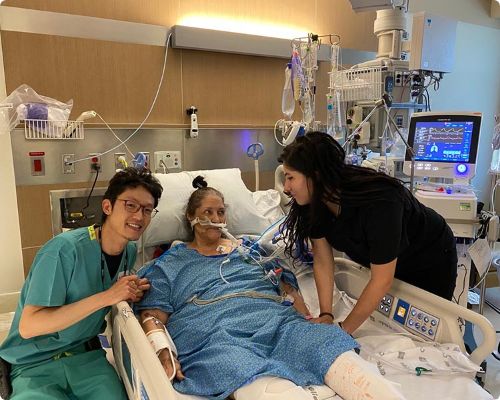 I stumbled upon Kali’s podcast midway through my anesthesia critical care fellowship in February 2021. At our institution, I got the impression that patients in the ICU either got better on their own or had a prolonged and complicated course to LTAC or death. In her podcast, Kali explained that LTAC was rarely the outcome for patients in the Awake and Walking ICU™ in Salt Lake City.