RESOURCES

Dayton Walking From ICU Episode 22 Interdisciplinary Teamwork

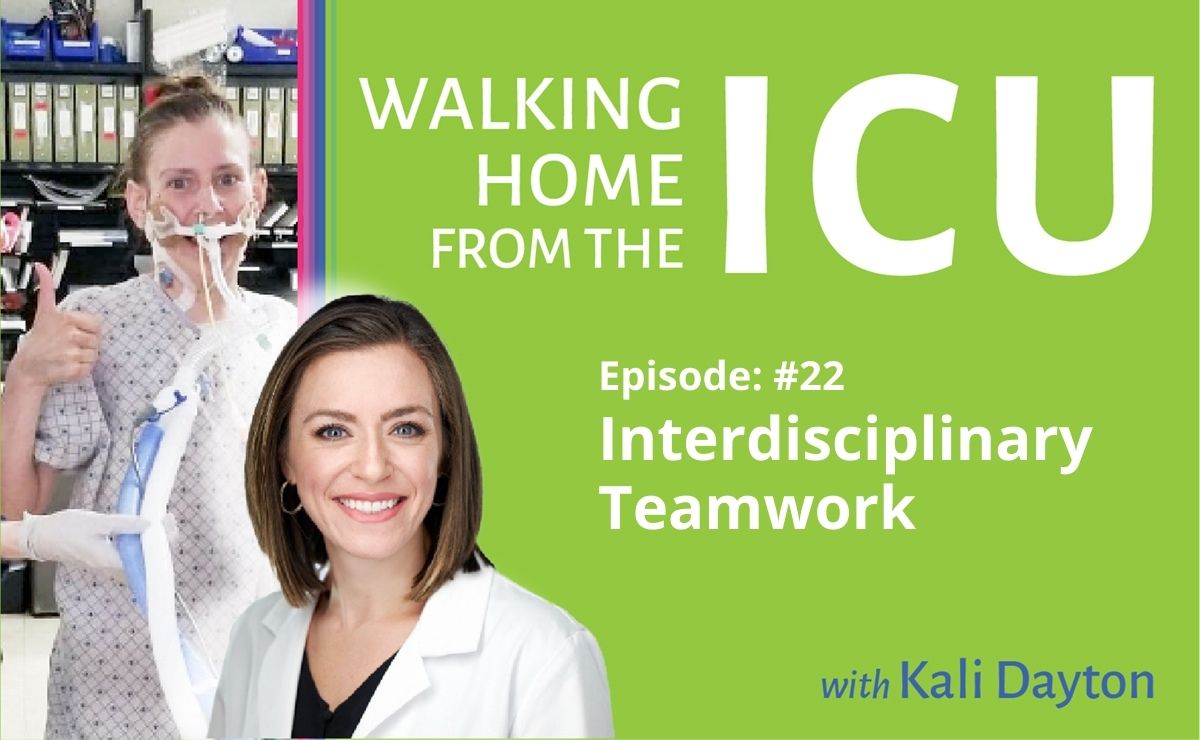
Walking Home from The ICU Episode 22: Interdisciplinary Teamwork

SUBSCRIBE TO THE PODCAST

Apple PodcastsBreakerCastBoxGoogle PodcastsOvercastPocketCastsRadio PublicSpotify

Patients cannot walk out of the ICU without the efforts and expertise of each discipline. Kali discusses the role each discipline plays in returning patients to their lives.

Episode Transcription

Kali Dayton  

I saw a profound statement on Twitter that said, “No one person can overcome delirium.” 

That is so true. It is as Polly said last episode, “An awake and walking culture requires buy in from everyone. delirium cannot be prevented, and patients will not be kept strong during critical illness without a multidisciplinary approach.” Nurses can keep their patients awake, but if respiratory therapists are not there to help walk the patients, there is no way we can keep them walking. 

Physical therapists can have a goal of walking patients. But if they are sedated, then physical therapists cannot do their job, we can have all the equipment up and ready to walk. But without the expertise of physical therapy every day, optimal mobility won’t happen. Nurses can want to achieve this goal. Though our nurse practitioners and doctors that have the same vision, they may face an uphill battle without the support of pharmacy. We may be inclined to jump to narcotics right away, or give unnecessary medications at three in the morning. Everyone collaborate- they create a game plan at the beginning of the shift and have a rough idea of who is traveling, what’s going on with the other patients. who was going to walk first, and they anticipate helping each other. 

Their goal is to help everyone succeed and make the burden lighter for everyone else. They are excited to see physical therapy enter the unit. Usually because their patients are already writing notes, asking to go for walks. I have seen a meme that reflected better sentiments. Nurses feel when physical therapists leave patients in the chair. That didn’t make sense to me. I see nurses walk into the room in the morning and get their patients up in the chair to wait for their walk with physical therapy. 

You see- mobility, delirium prevention, and preservation of function is not just isolated to PT, OT or any one discipline. As Polly said, “We do not work in silos. We work together.”  

The next series of episodes, each discipline of an ICU with an awake and walking culture will share with us their roles in getting patients back to their lives. We will see how this culture penetrates each specialty in the ICU, and the power that comes with collaboration. 

Every day, we have a multidisciplinary rounds meeting with a member of each team of the ICU and the loved ones of the patients. We discuss each case and plan. A big part of the discussion are the risk factors for delirium, obstacles to mobility, and where the patient is in their course to be functional in their lives. 

Again, these discussions are brief, succinct, but powerful. Everyone is in it together. Everyone has the same vision for their patients and knows the part that they play. They have the vision of them walking out of the ICU because they know it can be done and they have done it. The only people who truly qualified to teach this process are the ones that literally walk the talk so I present to you the masters of the awake and walking ICU.


Transcribed by https://otter.ai


SUBSCRIBE TO THE PODCAST

Apple PodcastsBreakerCastBoxGoogle PodcastsOvercastPocketCastsRadio PublicSpotify

About the Author, Kali Dayton

Kali Dayton, DNP, AGACNP, is a critical care nurse practitioner, host of the Walking Home From The ICU and Walking You Through The ICU podcasts, and critical care outcomes consultant. She is dedicated to creating Awake and Walking ICUs by ensuring ICU sedation and mobility practices are aligned with current research. She works with ICU teams internationally to transform patient outcomes through early mobility and management of delirium in the ICU.

LEARN MORE

I am a nurse leader responsible for improving practices across the intensive care units of a large health system. As an experienced ICU nurse, I know the culture that most often exists in ICUs is one that promotes and accepts over-sedation that often causes unintended harm. While reviewing the literature to better align our liberation practices with the best evidence, one of our bedside nurses discovered Walking Home From The ICU. The combination of poignant stories from ICU survivors with the expertise of some of ICU Liberation’s leading experts became the impetus for a system-wide evidence-based practice improvement project aimed at changing analgesia and sedation management in our ICUs.

After initially being inspired by Kali’s podcast and the incredible stories it provides, we saw an opportunity for more. We brought Kali in to present a webinar to almost 100 of our critical care team members, including nurses, APPs, physicians, and respiratory therapists. Kali’s presentation struck a needed balance between evidence-based practice information and inspiring stories, highlighting real patients who benefited from a practice that is often very different from what occurs in most ICUs today. The webinar was very well-received by all who attended, and the lessons learned have continued to be referenced by our team members as we strive to create an Awake and Walking ICU culture.

Kali offers a refreshing perspective on critical care, and she supports it with a wealth of knowledge garnered from years as a bedside nurse and advanced practice provider. Kali knows how to speak to clinicians because she is one, and she’s still very connected to the daily lived experiences of those on the frontline of critical care. I believe anyone working in critical care will find inspiration in Walking Home From The ICU to change the harmful culture of sedation in their practice. I would even go so far as to recommend the podcast as required listening for all ICU team members, whether experienced clinicians or new residents and nurses. When additional support is needed, I encourage clinical leaders to utilize Kali’s expertise and experiences to further inspire and motivate their teams. Time spent working with Kali is an investment that will pay dividends in the positive impact it has on the lives of the patients we serve.

Patrick Bradley, MSN, RN, CCRN
Virginia, USA

READ MORE TESTIMONIALS >

DOWNLOAD THIS VALUABLE FREE REPORT

Perception Versus Reality: Debunking The Myths About Medically-Induced Comas

By clicking the Subscribe button, you agree to this site's Privacy Policy. Your information is always kept safe.