Episode 199 Awake, Communicative, Autonomous, and Mobile- A Survivor and Nurse’s Experience

Episode 199: Awake, Communicative, Autonomous, and Mobile- A Survivor and Nurse’s Experience

When Molly suffered a severe stroke requiring mechanical ventilation and an EVD, what did Kaira do to prevent further neurological injury? What role did Molly’s ability to communicate while intubated play in her survival? Molly and Kaira both join us to share their perspectives from both sides of the ICU bed. Episode Transcription Kali Dayton:
Learn More > from Episode 199: Awake, Communicative, Autonomous, and Mobile- A Survivor and Nurse’s Experience

Episode 198: Age Friendly Care in the ICU- Riding the Wave of 4Ms

Episode 198: Age Friendly Care in the ICU- Riding the Wave of 4Ms

CMS is rolling out a new initiative to require hospitals to have age-friendly care: 4Ms. This means that we must prioritize: Medications, Mentation, Mobility, and What Matters. Karen Mack, DNP, MBA, APRN, executive director at NICHE, shares with us how leverage age-friendly care in advocating for Awake and Walking ICUs! Episode Transcription Kali Dayton: [00:00:00]

Learn More > from Episode 198: Age Friendly Care in the ICU- Riding the Wave of 4Ms

Episode 151: Breathing Trials with Karsten Roberts

Walking Home From The ICU Episode 151: Breathing Trials with Karsten Roberts

Are awakening trials just for breathing trials? How do we set patients up for successful breathing trials to minimize time on the ventilator? What role does sedation and mobility play into prompt liberation from mechanical ventilation? Karsten Roberts, MSc, RRT, FAARC joins us now to dive deep into spontaneous breathing trials in the ABCDEF Bundle.

Learn More > from Walking Home From The ICU Episode 151: Breathing Trials with Karsten Roberts

Walking From ICU Episode 86 Ventilator Management in the Awake and Walking COVID19 Unit

Walking Home From The ICU Episode 86: Ventilator Management in the Awake and Walking COVID19 Unit

How is the “Awake and Walking ICU” keeping their COVID19 patients mentally and physically functional during severe COVID19? Do they face constant ventilator asynchrony and how do they deal with it? Geoff shares with us his vast experience as a respiratory therapist in walking patients on mechanical ventilation during critical illness and now COVID19. Episode

Learn More > from Walking Home From The ICU Episode 86: Ventilator Management in the Awake and Walking COVID19 Unit

Episode 159: Building a Dream Team

Walking Home From The ICU Episode 159: Building a Dream Team

What happens when resources and staffing are dedicated to providing high touch and high compliance with the ABCDEF bundle? How does adequate staffing, interdisciplinary team dynamics, and quality protocols impact patient outcomes and financial benefits? What is the “secret sauce” of successfully weaning patients from the ventilator? Sam Nimah and Phillip Norris share with us

Learn More > from Walking Home From The ICU Episode 159: Building a Dream Team

Episode 158- Keeping Up With the Times. A Deep Dive Into the Benefits of Verticalization Therapy

Walking Home From The ICU Episode 158: Keeping “Up” With the Times. A Deep Dive Into the Benefits of Verticalization Therapy

What happens to the body at the cellular, neurological, pulmonary, musculoskeletal, and cardiovascular levels when it remains supine for days to weeks? What is verticalization therapy and what does current research reveal about its benefits during critical illness? Verticalization experts, Phillip Gonzalez, MOT, OTR/L, BCPR, Nikki Stephens, DNP, APRN, FNP-C, and Jenna Hightower, PT, DPT,

Learn More > from Walking Home From The ICU Episode 158: Keeping “Up” With the Times. A Deep Dive Into the Benefits of Verticalization Therapy

Episode 150: Awakening Trials- "Rehumanization of the Patient"- With Dr. Wes Ely

Walking Home From The ICU Episode 150: Awakening Trials- “Rehumanization of the Patient”- With Dr. Wes Ely

What is the purpose of awakening “trials”? When should awakening “trials” be done? How can we have successful awakening “trials”? Dr. Wes Ely joins us in this episode to crack the code on sedation cessation.   Episode Transcription Kali Dayton: Last week, I did a little survey on social media. I recognize that my followers
Learn More > from Walking Home From The ICU Episode 150: Awakening Trials- “Rehumanization of the Patient”- With Dr. Wes Ely

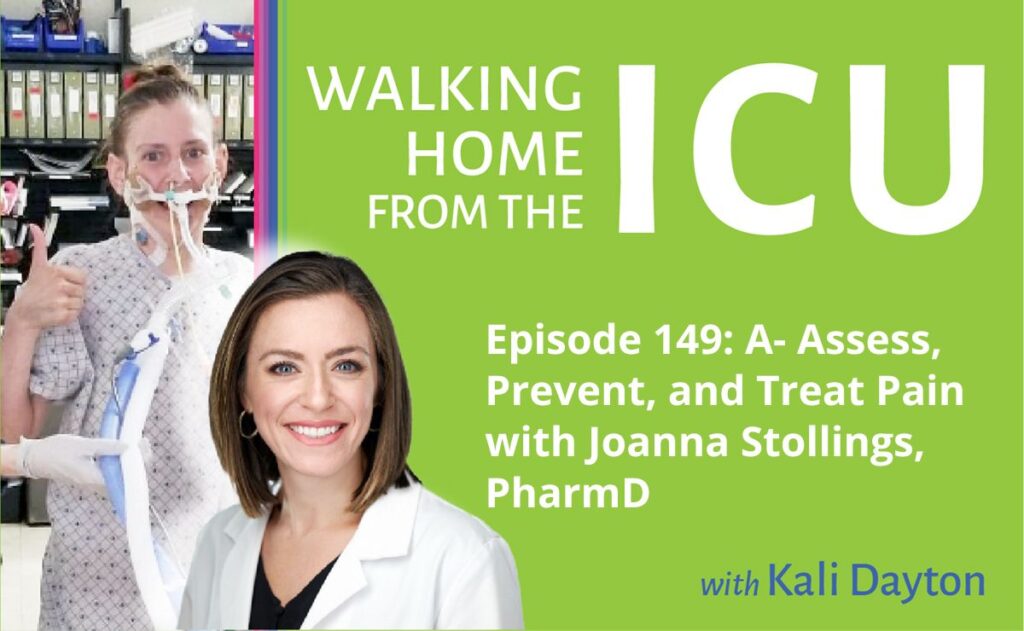
Episode 149: A- Assess, Prevent, and Treat Pain with Joanna Stollings, PharmD

Walking Home From The ICU Episode 149: A- Assess, Prevent, and Treat Pain with Joanna Stollings, PharmD

The A of the ABCDEF Bundle is for “Assess, Prevent, and Treat Pain”. How do we truly master this tool and how does this impact patient outcomes? Can we assess, prevent, and treat pain while simultaneously striving to have all possible patients awake, autonomous, and even mobile? Joanna Stollings, PharmD, shares what the A of

Learn More > from Walking Home From The ICU Episode 149: A- Assess, Prevent, and Treat Pain with Joanna Stollings, PharmD

Over the last few years I have become aware of the PICS (post-intensive care syndrome) condition and the very serious negative impact that it has on our ICU survivors. I have become much more aware of the potential negative impact of anxiety, depression, PTSD and cognitive dysfunction. Many patients whom we consider saves in the sense they leave the ICU alive have many issues that most people would consider far from a successful experience. Their lives are often dramatically changed in a very negative fashion.

I am a professor of medicine and have been an ICU director for over forty years. What I find very disturbing in my own experience and that of many other intensivists is that this outcome is generally considered acceptable; the patient survived and will get better with time. We have little access to these patients and almost zero information about their condition unless they are unfortunate enough to return to our ICUs. Very few of us have a PICS clinic where we would have a chance to better understand the challenges that some of our patients encounter, and there are very few systems in place to provide feedback to us as ICU clinicians. Therefore, we are blissfully ignorant of the many challenges that a substantial number of our survivors encounter. This is a major problem. The vast majority of ICU survivors and their families will experience cognitive, emotional and physical symptoms which often have devastating impacts on their lives. At this time, with PICS clinics being a rarity, there is no reasonable mechanism for intensivists to have a solid perspective on the frequency and severity of this condition.

How patients and their families are treated in the ICU often has a major impact on how the patient and families survive post discharge. It is generally agreed that most sedation infusions, particularly benzodiazepines, frequently have higher incidences of delirium and post-discharge dysfunction. There are a few hospitals in this country where sedative infusions are rarely used and the incidence of the complications described above are dramatically decreased. I have visited one of these hospitals and was amazed to see how effectively patients on maximum ventilator support can be managed, even walking without sedative infusions. In an effort to explore this treatment option in greater detail I have identified Kali Dayton. She is a nurse practitioner who has practiced in this Awake and Walking ICU for many years and is an amazing source of information on this topic. After extensive discussion with many colleagues, administration and many others, and reviewing the major potential benefits of the program for our patients, we have decided to introduce this program into our hospital.

Peter J. Murphy, MD, FCCP, MRCPI, BSc

READ MORE TESTIMONIALS >

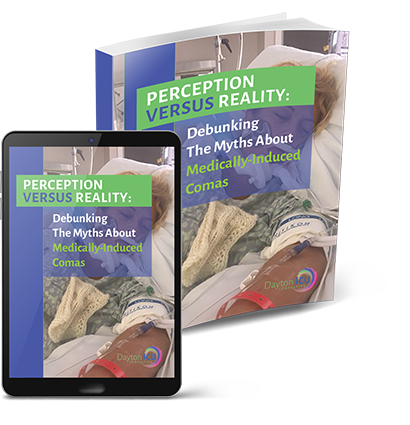
DOWNLOAD THIS VALUABLE FREE REPORT

Perception Versus Reality: Debunking The Myths About Medically-Induced Comas

By clicking the Subscribe button, you agree to this site's Privacy Policy. Your information is always kept safe.