Blogs

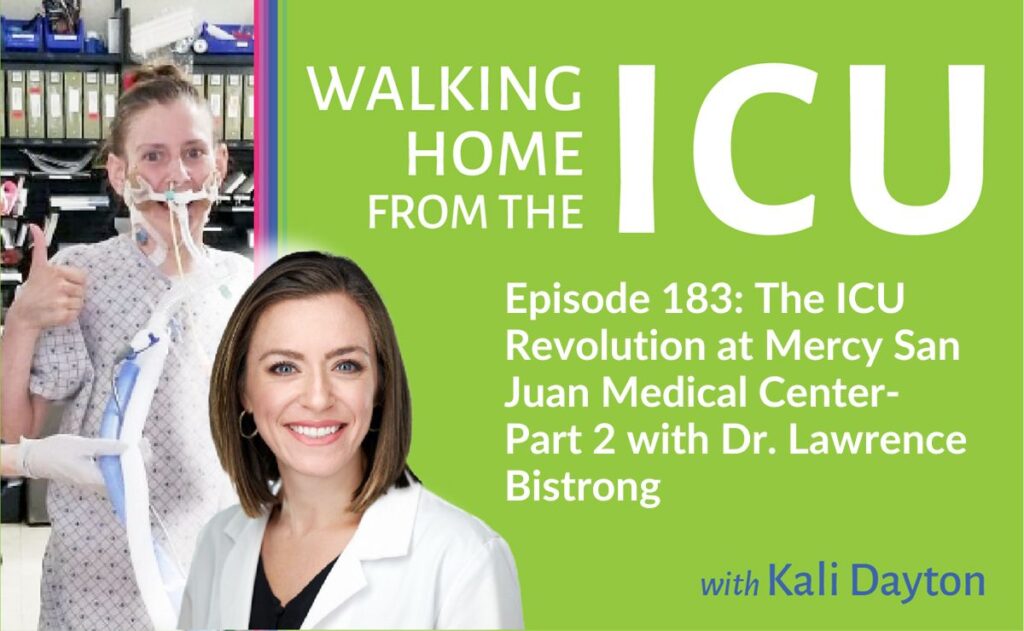
Episode 183: The ICU Revolution at Mercy San Juan Medical Center- Part 2 with Dr. Lawrence Bistrong

Episode 183: The ICU Revolution at Mercy San Juan Medical Center- Part 2 with Dr. Lawrence Bistrong

What happens when a medical director really sees the reality of “normal practices” and becomes a revolutionist? Dr. Bistrong shares his personal conversion and the key role he has playing in his team’s transformation. Episode Transcription Kali Dayton 0:00 This is the walking home from the ICU Podcast. I’m Kali Dayton, a nurse practitioner and
Learn More > from Episode 183: The ICU Revolution at Mercy San Juan Medical Center- Part 2 with Dr. Lawrence Bistrong

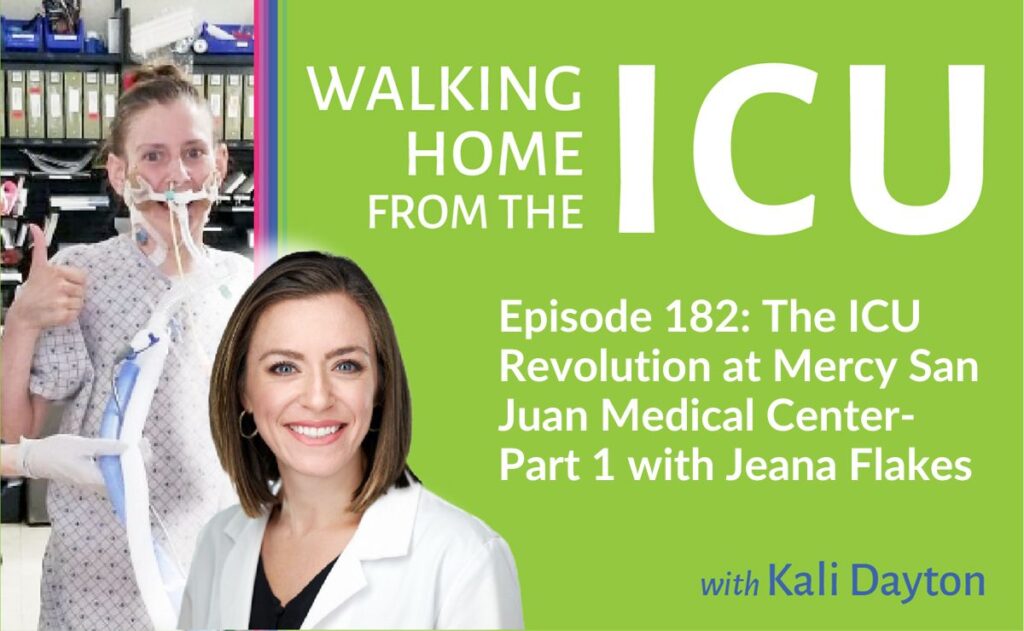
Episode 182: The ICU Revolution at Mercy San Juan Medical Center- Part 1 with Jeana Flakes

Episode 182: The ICU Revolution at Mercy San Juan Medical Center- Part 1 with Jeana Flakes

Standardized sedation and immobility are rooted in a gap in education. What is the power of a nurse educator in transforming knowledge, culture, and practice in the ICU? Jeana Flakes, MSN, RN shares how she helped lead the ICU Revolution as a nurse educator at Mercy San Juan Medical Center. Episode Transcription Kali Dayton 0:00

Learn More > from Episode 182: The ICU Revolution at Mercy San Juan Medical Center- Part 1 with Jeana Flakes

How Failing to Practice the ABCDEF Bundle Creates Legal Liabilities in the ICU

How Failing to Practice the ABCDEF Bundle Creates Legal Liabilities in the ICU

As a nurse and a nurse advocate, I am passionate about protecting nurses and all ICU clinicians from falling victim to legal liabilities in the ICU. The alarming reality is that when hospitals fail to train and support their teams in keeping patients as awake and mobile as possible, everyone from hospital administrators to bedside

Learn More > from How Failing to Practice the ABCDEF Bundle Creates Legal Liabilities in the ICU

Episode 179- The Legal Liability of Failing to Practice the ABCDEF Bundle

Walking Home From The ICU Episode 179: The Legal Liability of Failing to Practice the ABCDEF Bundle

Fear of “liabilities” is often a barrier to keeping patients awake and mobile in the ICU. Yet, we know that the ABCDEF is evidence-based best practices. So what are the legal liabilities to a hospital, leadership, and bedside clinicians of current cultural practices? Maggie Ortiz, MSN, RN joins us now to share her expert perspective.

Learn More > from Walking Home From The ICU Episode 179: The Legal Liability of Failing to Practice the ABCDEF Bundle

Diane’s Story- An Unfortunate Example of the Risks of Immobility and Sedation

Diane’s Story: An Unfortunate Example of the Risks of Immobility and Sedation

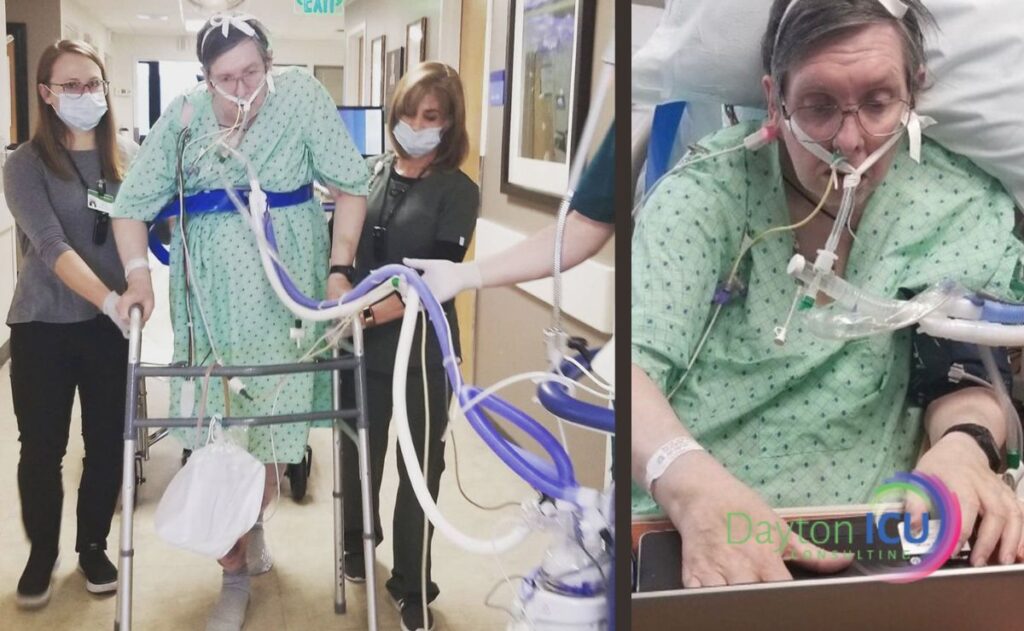
Despite their widespread use in the ICU, decades of research have proven the risks of immobility and sedation. And as clinicians, it’s easy to approach care as a robotic conveyor belt instead of focusing on the individuals, families, lives, careers, and futures that are being affected. But in reality, ICU patients are being harmed, having

Learn More > from Diane’s Story: An Unfortunate Example of the Risks of Immobility and Sedation

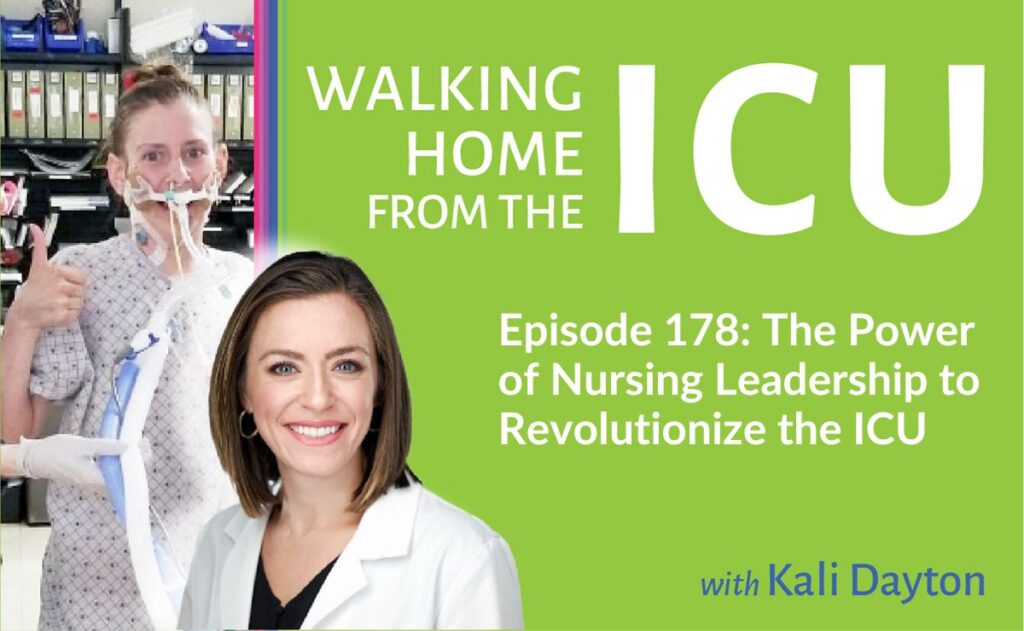
Episode 178: The Power of Nursing Leadership to Revolutionize the ICU

Walking Home From The ICU Episode 178: The Power of Nursing Leadership to Revolutionize the ICU

Although the ABCDEF bundle does not solely rest on the shoulders of nurses, their leadership is KEY. Andrea Silva, BSN, RN shares with his her journey to revolutionizing care in her ICU as an assistant nurse manager. Episode Transcription Kali Dayton 0:00 Kali, this is the walking home from the ICU Podcast. I’m Kali Dayton,

Learn More > from Walking Home From The ICU Episode 178: The Power of Nursing Leadership to Revolutionize the ICU

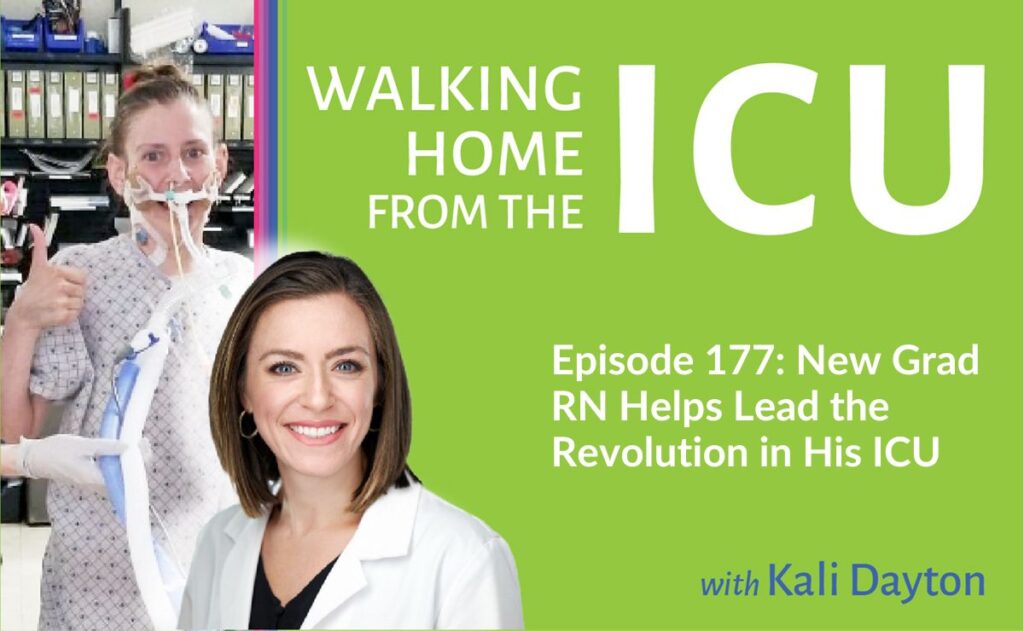
Episode 177: New Grad RN Helps Lead the Revolution in His ICU

Walking Home From The ICU Episode 177: New Grad RN Helps Lead the Revolution in His ICU

The ICU is an overwhelming and daunting environment to start a new career. While learning so many new skills from experienced mentors, how did Michael Glade, RN, BSN also see past “what is done” to “what should be done” in his ICU? Michael shares with us what led him to help lead the revolution in

Learn More > from Walking Home From The ICU Episode 177: New Grad RN Helps Lead the Revolution in His ICU

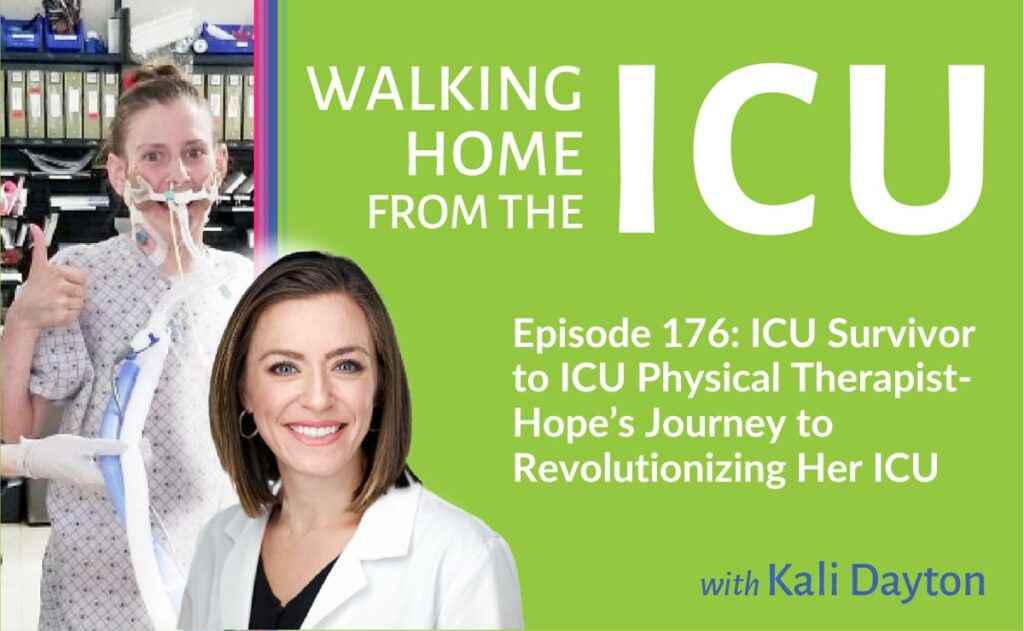
Episode 176: ICU Survivor to ICU Physical Therapist- Hope’s Journey to Revolutionizing Her ICU

Episode 176: ICU Survivor to ICU Physical Therapist- Hope’s Journey to Revolutionizing Her ICU

The best empathy training is personal experience. Hope Newton joins us now to share how her personal experience in the ICU leads her to revolutionize her ICU as a physical therapist. Episode Transcription Kali Dayton 0:00 Kali, this is the walking home from the ICU Podcast. I’m Kali Dayton, a nurse practitioner and ICU consultant.

Learn More > from Episode 176: ICU Survivor to ICU Physical Therapist- Hope’s Journey to Revolutionizing Her ICU

Over the last few years I have become aware of the PICS (post-intensive care syndrome) condition and the very serious negative impact that it has on our ICU survivors. I have become much more aware of the potential negative impact of anxiety, depression, PTSD and cognitive dysfunction. Many patients whom we consider saves in the sense they leave the ICU alive have many issues that most people would consider far from a successful experience. Their lives are often dramatically changed in a very negative fashion.

I am a professor of medicine and have been an ICU director for over forty years. What I find very disturbing in my own experience and that of many other intensivists is that this outcome is generally considered acceptable; the patient survived and will get better with time. We have little access to these patients and almost zero information about their condition unless they are unfortunate enough to return to our ICUs. Very few of us have a PICS clinic where we would have a chance to better understand the challenges that some of our patients encounter, and there are very few systems in place to provide feedback to us as ICU clinicians. Therefore, we are blissfully ignorant of the many challenges that a substantial number of our survivors encounter. This is a major problem. The vast majority of ICU survivors and their families will experience cognitive, emotional and physical symptoms which often have devastating impacts on their lives. At this time, with PICS clinics being a rarity, there is no reasonable mechanism for intensivists to have a solid perspective on the frequency and severity of this condition.

How patients and their families are treated in the ICU often has a major impact on how the patient and families survive post discharge. It is generally agreed that most sedation infusions, particularly benzodiazepines, frequently have higher incidences of delirium and post-discharge dysfunction. There are a few hospitals in this country where sedative infusions are rarely used and the incidence of the complications described above are dramatically decreased. I have visited one of these hospitals and was amazed to see how effectively patients on maximum ventilator support can be managed, even walking without sedative infusions. In an effort to explore this treatment option in greater detail I have identified Kali Dayton. She is a nurse practitioner who has practiced in this Awake and Walking ICU for many years and is an amazing source of information on this topic. After extensive discussion with many colleagues, administration and many others, and reviewing the major potential benefits of the program for our patients, we have decided to introduce this program into our hospital.

Peter J. Murphy, MD, FCCP, MRCPI, BSc

READ MORE TESTIMONIALS >

DOWNLOAD THIS VALUABLE FREE REPORT

Perception Versus Reality: Debunking The Myths About Medically-Induced Comas

By clicking the Subscribe button, you agree to this site's Privacy Policy. Your information is always kept safe.