SUBSCRIBE TO THE PODCAST


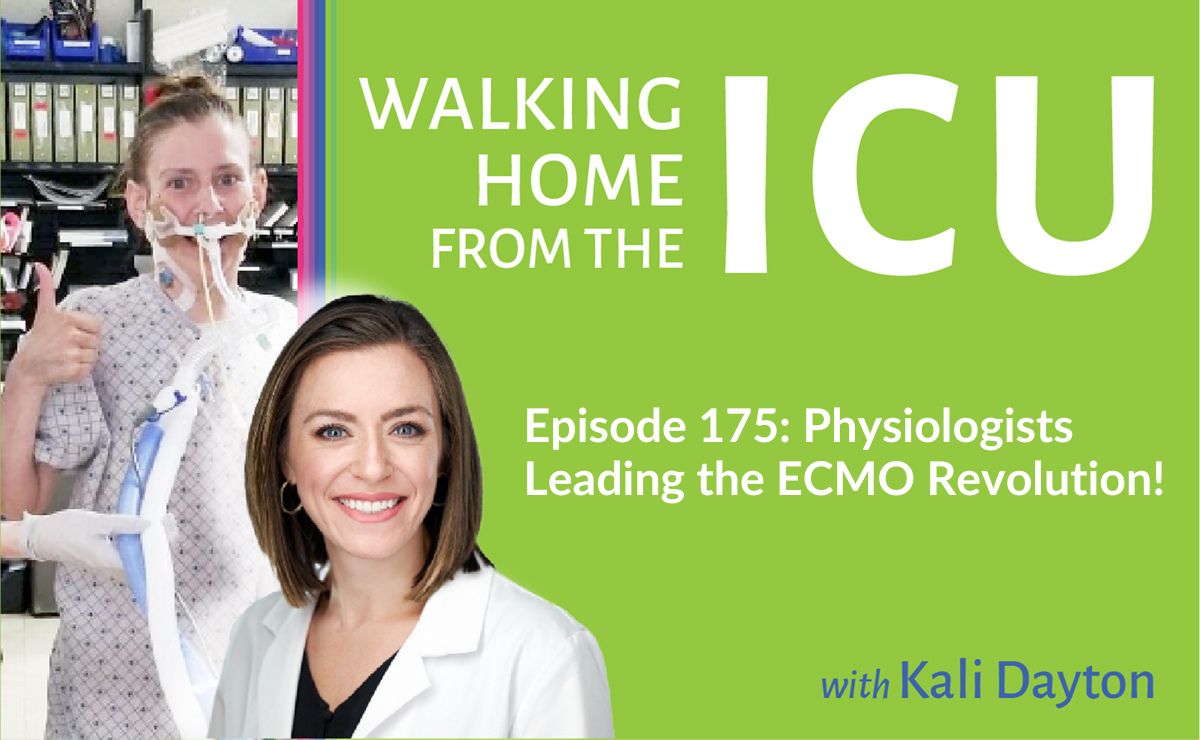
Ilija Klipa MS, ACSM-CEP,ACSM-EP,ACSM EIM III, AACVPR-CCRP is a cardiac/pulmonary physiologist a high-acuity cardiac ICU. He shares his journey in pioneering physiology in the ICU as well as leading the revolution to create an Awake and Walking ICU.
Episode Transcription
Kali Dayton 0:05
This is the walking home from the ICU Podcast. I’m Kali Dayton, a nurse practitioner and ICU consultant. I help teams create awake and walking ICUs through evidence based sedation and mobility practices by hearing from survivors, clinicians and researchers will explore how to give ICU patients the best chance to walk out of the ICU and go home to survive and thrive. Welcome to the ICU revolution. Okay, I don’t even know how to introduce this episode. It is so effective in speaking to the power of teamwork, culture change, evolution of sedation and mobility practices in the ICU, use of verticalization beds, and even bringing in unique expertise and perspectives into our normal process of care. I’m excited to have Ilya tell you all about it. Ilya, welcome to the podcast. Thank you so much for being here. Can you introduce yourself to us?
Ilya klipa 1:13
Sure? My name is Ilya klipa. I’m a clinical exercise physiologist at Allegheny General Hospital in Pittsburgh, Pennsylvania, and I’m the primary therapist on our surgical ICU floor, essentially the critical care therapist on that floor.
Kali Dayton 1:27
So I think many of us have not really been exposed physiologists, right?
Ilya klipa 1:32
So right off the bat, that’s, that’s where people kind of like all my career, I’ve been in ICU settings, and then with this opportunity at Agh, again, the physical therapy department there, they just weren’t familiar with the mechanical support systems, the balloon pumps, the me with my background, and the new critical care team, kind of starting at the same time we kind of started this whole new initiative, and we have grown in such a quick manner, and It’s it’s been a great process to develop this program there.
Kali Dayton 2:03
Well, tell me about the role of physiologists and the ICU. I mean, what? What’s commonly their role? How common is it? And what’s your role?
Ilya klipa 2:10
It’s it’s very uncommon. Again, my specialty through all my grad school has always been the heart. You know everything a heart, and you know cardiac and pulmonary. So I’m very comfortable from, you know, from the schooling system that I was came from, to actually working, you know about the ECMO systems, about, again, the impellers, the balloon pumps, all that you know, you know. And then knowing how to decipher your basic vitals from your pressure lines, you know, your your art lines, your cbps and all and how they and how exercise can affect those numbers and what to look for, you know, how could it affect the patient’s stay and how we could get them mobilizing in a safe manner? And
Kali Dayton 2:47
so, how did you come to be in the ICU? I know, why was this ICU open to having a physiologist?
Ilya klipa 2:54
So, basically, I started there in 2018 I started in the coronary like care court, you know, cardiac ICU, just getting people out of bed. And before me, it was kind of like, Oh, if they have an a line in, we’re good, but anything if they are Swan now it’s like a bed rest. And I’m thinking to myself, uh, no, this, this, we can’t do this, you know. So basically, I just kind of put my best foot forward and said, Let’s just start dangling these people. So start dangling them, getting them out of bed to the chair, and then eventually progressing to mobilizing them a big barrier from that floor I came from, even if they’re on some pressers, that was a big no no to get them up. And I’m like, Oh, well, that’s why they have an a line, you know, are their maps. Okay, well, if it’s, we have constant monitoring with that line. Let’s, let’s utilize and get them moving. It’s just going to help them that for you know, you have your residents, your fellows, and they’re not familiar with mobility. It’s as simple as that. So you as the expert. Here’s here’s one thing I noticed, and this is with therapy overall, you go into a room and there’s a nurse there saying, No, you can’t get them up, their pressures, wonky. You being the you’re the expert in mobility. Say, Okay, well, let’s just, let’s just start with the let’s change position. Just because their map is a little little low doesn’t mean they have to stay here in bed. Let’s just start with the basics. And I think instilling that throughout the the PT, the OTs and the rest of the the exercise physiologist.
Kali Dayton 4:38
we’ve noticed a difference, finally, like there’s patients moving now that, like two years ago, were just staying in bed all the time, and the numbers are showing, the more aggressive we could get, the better their outcomes are, especially with the ECMO population, and you had to educate your other rehab Department colleagues.
Ilya klipa 4:43
Allegheny Health Network puts on a Cardiovascular Disease Symposium. It was back in May, so I got to speak there and tell people, you know what to look for, how to do it safely. And people, a lot of people, grasp onto it because, again, no one was really doing this. Progress before me. So they were really asking a lot of questions. They’re really in tune, and now everyone’s starting to catch up. And again, I can’t say it enough, the outcomes are showing. So, yeah, education has been a big part. I teach the mobility portion of we put on a two day ECMO course at our hospital. It’s 16 credit hours. It’s amazing, anyone attend, anyone can attend? Absolutely. We’re trying to get it out there. But it’s, again, it’s a two day course, 16 total hours, and we cover everything. And again, my position is, I do three, one hour lectures and a practical portion describing how to safely mobilize ecmos, you know, VA, VBS. The difference is between different circuits. The base is cannula positions, what to look for with your flows, your line pressures, all that type of stuff. And it’s, this is our second year. We do four a year. Our next one will be in August. And again, that’s how I came to met Jenna. She was the vital go. She’s the clinical director, and she had to step in for the rep that couldn’t attend. So she she was there, and I got talking with her. She actually got to see me in action with a young BB patient. She was right there with me, and she was, she was psyched. I love talking to her, because she’s all about it. I text her here and there what we’re doing, and she gets excited too. And you know, you’re kind
Kali Dayton 6:16
of the same group as so there’s Jenna Hightower. There’s Stephen Ramsey. We’ve had him on the podcast with the Ramsey protocol. He sounds like you’re in that group of pushing the envelope, really being aggressive in the cardiovascular ICUs.
Ilya klipa 6:29
I’m trying an interesting thing we just now we’re still waiting to get approved. I was the lead author on Oracle. We submitted to ACA, it was the concomitant use of a FEM balloon pump with a bi family cannulated VA ECMO patient. So as of now, there’s nothing out there saying how to do it, or who has done it. So we put a paper out there. We we’ve ambulated five patients with those devices in them. Unfortunately, one did not make it. They perished in the or they coded. But the four that did make it. Are all at home doing well, either transplant or LVAD. And again, no adverse events during the during the course of of ambulating, and I’m talking like 200 feet plus, you know, utilizing the vital Bill bed. So that’s what I mean, pushing the envelope, all within reason, of course. But again, the the outcomes were there. It’s a small population, but it’s a step. So again, if we can push that article out there other hospitals with these patients waiting for L bat, you know the advanced therapies could get them going.
Kali Dayton 7:30
And these are patients that lay their supine for a days weeks, and I’ve seen them, it’s amazing the condition that they end up in. And then what can you do with them? Are they even candidates for transplant anymore,
Ilya klipa 7:44
exactly. And I think another thing, and I there’s articles out there, people got to realize that work on these force the muscle wasting that occurs in the ECMO population is quicker than those just without that type of support. Because again, and I know you probably realize this, when that blood’s going through the circuit, it’s becoming damaged, essentially. So those inflammatory markers are even multiplied and atrophy, especially of the of the thighs. You know, the cross sectional area happens at a accelerator rate, as opposed to without an ECMO circuit. So that’s why it’s even more important to get this population moving,
Kali Dayton 8:21
and those inflammatory markers that increase not only contribute to muscular atrophy, but contribute to delirium. So you are having even more inflammatory markers from the ECMO machine, but also from the muscular atrophy hitting the brain. And the only tools we have to prevent delirium is to avoid medications that cause it mobilize them real sleep and family. So if you take away mobility, and many of our ECS are still sedated, we’re due to huge injustice to the brain as well. So we’re focusing on just one organ, and we’re disregarding other vital organs that are essential for survival.
Ilya klipa 8:56
Absolutely, I’m glad you put it that way, because essentially in every the articles I do read up on, and I, the way I try to explain, it’s a cascade event. It starts from here, and then it just keeps ballooning out. And I myself optimate. I always think about the heart and lungs, heart and lungs, but like, yeah, you gotta think about the brain. You gotta think the tissue everywhere else, the perfusion, all that. It just it gets wider and wider. So literally, the whole body is essentially affected when they’re just laying in there. So you got to look at it from multiple angles. And that’s one thing I really try to do. I look at, I try, really, like, look at the whole scope of the patient.
Kali Dayton 9:33
And I’ve learned from other physiologists that you guys really do see the muscular system as a vital organ system, almost equal to the heart and the lungs and the kidneys, which me coming from a pretty traditional ICU background, it really hurt my brain initially to chew on that. I was like, Hold on the muscles. Yeah, I know they’re important, but I always thought about that as being a back end thing, or. You know, an accessory when we’re just focusing on survival. Love the perspective of physiologists. I know that physical therapists and occupational therapists also see it. You guys see it as such an in depth, molecular level that really needs to be brought into the ICU.
Ilya klipa 10:14
It does my big thing. I the first thing i i tell you know, people, is the muscle is the biggest organ you got. You got to look at it like that. I really try to promote and I try to because the nursing staff, albeit they’re all smart, they’re bright. I’m very grateful for the floor I work on, like, like you just said, looking at it from a physiologist point of view is a little different. My big takeaway from getting these patients up is you got to think that the legs are, you know, skeletal muscle pump. Once we get those activated, you could take a little bit of a burden off the heart, because, again, the muscle mass in your legs help with venous return. They could even help with cardiac output. The more we get those big muscles squeezing and pushing out blood around. So that’s why, like, just general walking, is so amazing for these patients.
Kali Dayton 11:02
And yeah, we have these devices doing all this work, but we’re not utilizing the compensatory mechanisms that we have within our own body Exactly.
Ilya klipa 11:08
And when you do that, it helps overall comes, and I know everyone you know throws around the terms, like, flushes out metabolic waste and all that type stuff. I mean, yeah, that’s obviously important, but my big thing is keep it basic. Move the blood perfuse. That’s what we got to do. That’s the bottom line. Everything else will take care.
Kali Dayton 11:28
Yeah, that’s right. Oh my gosh. I had not thought about the muscles being part of the ABCs. Yeah, there
Ilya klipa 11:32
you go. So that’s why keep it basic again, what they’re on, the medications, all that, yeah, that’s all complicated, but don’t let what they’re on turn you away from what you have to do the basics of getting these patients moving again. And I know I keep reverting back that book, but again, it’s you got to think in a simple sense at times.
Kali Dayton 11:52
So I’m just fascinated by your perspective. They think many of our podcast listeners, they’re clinicians, P, T, o, t, R, T, R, N, M, D, right? The normal disciplines that come into the ICU, many of our listeners are obviously revolutionists, so we know what it’s like to be the crazy one, the Rogue One with the crazy perspective, right? So I’m still thinking you have a whole different extreme, where you’re now in a discipline that’s new to that you’re trying to establish your discipline and enroll in the ICU, and you’re also pushing them to do something vastly different than what they traditionally done and ever known. So walk us through. Mentioned they weren’t even really getting patients up that swans, we’re basically press and then you move to that. what was the next step?
Ilya klipa 12:36
So once, I mean, and again, that floor still kind of like behind basically built a council within our ICU or with within our hospital. We put together an ECMO mobility protocol. It was like a year process. It’s very in depth. We actually gave it to vital go to use to to at other places, because, again, we utilize available, vital go bed for that for some of those patients. So we’re really trying to spread out through our own hospital. So we’re working our way down. It’s slowly catching on. But again, it’s a change of culture, big change of culture. And it’s, it’s a lot of work trying to get people to catch on. That’s why, whenever I try to get as many people around, at times when I’m mobilizing an ECMO, and because I really try, like, look, we could do it’s it’s scary. And that’s one thing I do tell the new nurses and the new therapists, never lose that fear, never get too comfortable. Because, again, this is the top of the line with support.
Kali Dayton 13:33
There’s nothing else after this, and it’s a fair but I think over time it becomes just like a soberness, a sobriety, you never want to be physical around it, but you’re not always going to be as paralyzed and hesitant as you were when you started, but you should never lose the sobriety around the real risks involved. Absolutely.
Ilya klipa 13:53
I like how you put that right now. There are a few so within our PT and OT department, they do 12 week rotations without the hospital. So it was difficult starting this whole process, because, again, I’m the primary therapist up there, so I get a PT ot team. They’re comfortable by week 1011, boom, they’re getting transferred off.
Kali Dayton 14:14
So I hate that so much. I see that everywhere, and it’s so when I work with teams, I say, Do not switch your therapist out for at least six months. You can’t do that to new program. You can’t do that the team, there’s so the relationships, the competency, the trust, the expertise, is so undervalued, they don’t do that to RNs, right?
Ilya klipa 14:36
Exactly. I don’t know why it’s different, and I’m glad you said that because it is, it’s a widespread thing. It’s not just our hospital. And I tell that I’m like other hospitals do this. But within the past year, what I’ll say, within the past eight months, we actually finally got, there’s an OT and PT that I got for two row full rotations on the, you know, on my floor. So they were there for six months. And now. They’re the two that could, you know, pass some knowledge on to their department, and they’re finally, they, they the sense of familiarity is like night and day from when they started. They know the differences between Va Va. They know how to look for the cannulas, the measurements where the suture should be to secure them, the page, all those major, you know, key points to make sure the patient’s safe. They’re they’re finally there. Now it’s just a work in progress to keep that going. You know, it’s like it’s an everyday thing. It’s an everyday thing. You got to keep pushing.
Kali Dayton 15:31
And if they were to switch in six months, now, you’re starting over again, and that impacts patient care. I mean, it’s hard. I really am a deep believer that these programs and the competency and the reliability of these programs should not hinge on one person. We have to create a process that no matter which positions on, which nurse is on, which RT, is there, which PT, OT is there, patients are going to have the best chance to receive the best care.
Ilya klipa 15:55
right? And that’s the way I try to present it to them again. I’m all about I love teaching. I love getting people involved, because, again, it like you, it’s going to help the patient’s outcome, and we’re getting better at it. You know, there’s, there’s still, there’s still barriers, but that’s why you can’t take the position you’re in for granted. You can’t, you can’t let off the gas. The second let off the gas, I feel like that’s when everything starts to, you know, you just gotta stay ahead of the curve. You have to stay ahead of the curve, especially for for, you know, a role that I’m in right now, you know, and that’s why I just want to keep getting the word out there what we’re doing. Because here in Pittsburgh, there’s another thing. I don’t know if you’re familiar with, the health systems in Pittsburgh. I’m not, okay, well, there’s two big ones. There’s us highmor health, and then there’s UPMC, you know. And everyone hears about UPMC, you know, they’re obviously a bigger institution to us. But, you know, we, we, we do what they do. But again, they have the commercials, they have this, they have the they have the articles in the paper, and I want to put out there, hey, look, we’re, we’re doing just as much as them. We’re right there with them. You know, I want to show what our team’s doing, because what I think the team we have right now is amazing. You know, everyone, everyone’s pushed, every everyone’s excited, everyone like is enthusiastic. They’re, they have a true passion for being on that floor.
Kali Dayton 17:19
And this is reminding me, I’m working on certifications for teams to be certified as awake and walking ICUs. Oh, really. And I think as our health care system changes, it becomes more competitive. We know that being awake and walking ICU drastically changes outcomes. So for a team to be competitive or just to have the accolades to say we are in awake and walking at you, it’s a tough criteria, no stations given unless there’s an indication, patients are doing their highest sub mobility as soon as possible, unless there’s a contradication. I mean, it’s got to be consistent and reliable and over a certain period of time, but to have that certification, I think, will just be a point of pride for our teams, because your team’s working so hard, you guys have made such big strides. There should be something that you’re working towards, an objective to meet and a kind to celebrate.
Ilya klipa 18:06
It absolutely Well, speaking on that, we just had else come visit in April, we’ve been gold for, I think, since 2009 so this year was like, you know, we applied for platinum. They love what we did with the mobility, because we literally started at on, at scratch. No, no. Ecmos mobilized before 2022 and then they saw we just like I tell people, zero ambulated In 2021 10 mobilized in 2022 35 ambulated 2023 and now this year, we’re on pace for 60, and they love to see how we were able to do that, you know. And I want to give a thanks to Dr Tyler Van Dyke, because he came into our program in 2021 I want to say, and really brought this new way of doing things, especially with this population, he kind of gave me the keys and said, Ilya, here we go, man. So I want to give thanks to him for, you know, instilling trust in me to carry this process out. You know,
Kali Dayton 19:12
powerful physician Ally can make a huge difference on the entire team being willing and able to optimize their roles, right? Absolutely. On the flip side, if a physician is not bought in, especially a leader that brings their entire physician team to be bought into this process, it makes it almost impossible for the rest of the team to get their jobs done.
Ilya klipa 19:34
Absolutely I agree with that. That’s why I’m so thankful again, because all the physicians and a PPS, you know, I can name them all, because they all play a they’re all a huge ass. They help. I mean, we all help each other, but like having their having their support, and having the biggest thing I’m I’m really proud of is I feel like I’ve gained the full trust of that floor. That’s the one thing I’m very proud of. People. They’re like, oh yeah. Do you think they go? Up, yeah, I think, okay, go forward, having that behind you. That’s one of the biggest career accomplishments to this point for me, is just having that backing from everyone.
Kali Dayton 20:08
Yeah, if you were to leave tomorrow, it would be really hard to build up that kind of trust and competency. And so I love that you’re taking on this education role and making sure that it doesn’t just hinge on you, but you’re you’re immortalizing these practices and this culture change throughout the entire team, and therefore it’s making your job easier and everyone’s care better.
Ilya klipa 20:32
I’m trying my best to do it. I’m trying, and it’s been a great journey so far. I just want to keep doing it.
Kali Dayton 20:37
Have you tracked outcomes? So you’ve obviously tracked the volume of patients you mobilize. Have you seen an impact in their outcomes?
Ilya klipa 20:43
So we just started. So there’s one physician I work with for my, you know, research I’m doing, especially who he was a huge asset. He helped me with the concomitant use of the balloon pump and buy from where the can lead. Dr Sean Modi, he’s been a huge asset. And he has put together an ECMO study within what’s called Red Cap. I’m sure. Are you familiar with red cap? Not? Okay. It’s basically a program you could put data in and you could, you could track how things are going. Okay? This year, we just put together a red cap program for our ECMO population to see how outcomes are going, because that’s the new we do. We want to see if we’re actually making a difference. So again, we’ll put it together and it there’s, there’s about eight or nine different categories of you know, when they were intubated, when they were cannulated, when with when did they walk? How far did they walk? There’s different sections for each patient. So we’re, we’ll, get the data from that and see what we can break down. But from the mobility standpoint, again, as you know, some of these economic patients come in, there’s really, unfortunately, not much you could do. I have a cyclometer I use. I’ll do passive but some of them just don’t make it. You know, the ones that were ambulatory, we ambulated in 20 2318 patients. Teen. Of those patients are at home. Now, the three that didn’t make it were all, as I told you earlier, one, unfortunately in the Omar that was out of everyone’s control. One wanted to go comfort measures. They were done. And the third one was a very unfortunate case, a young patient who received the transplant, who and then through a massive PE so if it wasn’t for those you know, who knows where the we could have had an 18 for 18 there. But again, my big thing is, the more you could do, the better the outcomes, as simple as that.
Kali Dayton 22:37
If you’ve been listening to this podcast, you’re likely convinced that sedation and mobility practices in the ICU need to change. The ICU community is facing incredible difficulty with the trauma from the pandemic, staffing crisis and burnout. We cannot afford to continue practices that result in poor patient outcomes, more time in the ICU, higher healthcare costs and greater workload for the ICU team, yet the prospect of changing decades of beliefs, practices and culture across all disciplines of the ICU is a daunting task. How does this transformation start? It can begin with a consultation with me to discuss your team’s current practices, barriers, and to formulate a plan to help your ICU become an awake and walking ICU. I help teams master the ABCDEF bundle through education, consulting, simulation, training and bedside support. Let’s work together to move your team into the future of evidence based ICU care. Click the link in the show notes of this episode to find out more with your red cap data analysis, I would love to see you guys maybe see correlation, or see if there is a correlation between dose and outcomes. That sounds like a good opportunity. Since you did such a good job tracking the levels and the duration and the types of mobility that you did, that would be really interesting. Just to have 15 patients at home. I’m sure people that do ECMO were like, well, I mean, they were discharged home from hospital.
Ilya klipa 24:05
Oh, either IPR home, but they are all home now. The ones are all at home doing.
Kali Dayton 24:11
well, no, that’s That’s amazing. What helped you along this journey? Obviously, you had good physician buy in. You were able to get your therapist engaged in the education. Get them to stay there longer, six months. How about working with your RNs? How did you support the RNs in this transition?
Ilya klipa 24:27
Well, the RNs on this floor, they’re all very bright. They’re very good at buying into the mobility. Our thing is Night Shift gets them in the chair before the turn of shift, so by the time I’m there, they’re already up in the chair. So that change of culture is already was already instilled before I was even up there, like full time. But again, I have their backs. They have my back. Whatever I need from them. They’re right there. I can’t do without I can’t do my job without them, from line management to monitoring to if they need a. Little bit more press or something to keep up. I mean, all those little things, I need them there, and just like they need me. So the COVID, this we built on that floor is outstanding. I can’t say enough about everyone on that floor.
Kali Dayton 25:14
yeah, and how has, how has this impacted team dynamics and the morale on the unit? Okay,
Ilya klipa 25:19
that’s a good so when you, when you think about the care of these patients, you know, it kind of comes down to some of them, you know, how am I going to word this, families and all that? Don’t think about a team approach, you know. And when you think of mobility, is it important? Yes. Do people realize it’s is it one of the most important things you could argue? But the one thing I will say about mobilizing this population is it does bring the team together, because it is a team effort. You need physician, a PP, me, the nurse, the RT, the perfusionist, all the way down the line, the PCT, so that that time, that event of actually getting these patients moving, brings that all together, and it involves everyone. That’s been a good outcome to see. It’s a whole team effort to get this done, and that’s why I try to tell them, like, look, this is all of us here. I might have been the tip of the spear, whatever, but without anyone there, can’t do it. You just can’t. And
Kali Dayton 26:14
did you guys have to hire extra people? No, we we’ve
Ilya klipa 26:18
gotten better. We’re way more efficient the way we time things at this point. Okay, so the first couple ecmos We mobilized. It was like an hour long process. Yep, there’s like 20 people there. Now, you know, we’re ambulating like a VA ECMO who’s been and, you know, ambulatory. The whole process from having perfusion up there, getting them out of bed is about 20 minutes, and that’s walking, that’s walking a substantial that’s walking over 50 feet, you know. So we have this, we have it down to a system. And again, that’s very important, because the perfusionists at our hospital are very busy. I mean, everyone’s busy. But again, you can’t mobilize a patient without perfusions. In our hospital, we don’t have ECMO specialists. I mean, if you take that class, as I talked about earlier, you’re considered an ECMO specialist in our hospital. But again, we need a perfusionist to come off the wall, gas, to actually leave the room and to monitor the circuit. But this is vital for the patients that are getting worked up for advanced therapies, LVAD transplant, because I try to get them going twice a day. So again, that’s a lot of manpower. It’s a lot of effort to keep that, keep that going, and everyone has just been there and bought into it, and we have it down pretty, pretty good.
Kali Dayton 27:28
That’s a very common pattern that I see, not just in the cvicu, but elsewhere. People will email me after I’ve visited. They’re like, we just got a patient up at the chair, and it took 45 minutes and five people, are you serious? I have to assure them, that’s because it’s one of their first times doing it alone. They’re having to think through every little thing, and they’re nervous, and it just takes so much more time and effort and people. But down the road, you know, six months later, they’re like, yeah, it takes two or three people to walk someone a lap around the unit and half the time, or a fourth of the time. So it’s nice to hear that reaffirmed, even with the extra devices that you guys have in your unit, your patient population, that you’ve experienced the same where it becomes efficient and everyone understands their role, they’re competent. That doesn’t mean that you’re cutting corners. Yeah, you’re not cutting corners. You’re not being statistical about it, but you’re being efficient and competent. And that came with time, and you had to take an hour to gain that expertise and that competency to then be able to do that so quickly, exactly.
Ilya klipa 28:28
And that’s where, again, the team approach is so important. Everyone knows what to expect now. Our big thing now is like nursing with no therapy there. Over the weekends, they’re getting their patients out of bed to the chair. You know, I’ll leave what they call passive aggressive notes on doors each weekend, you know, if I’m not there over the weekend, just to say, hey, tid patient, bed, the chair, you know, mid of two or whatever, just little, little cues like that. And albeit, they make fun of me a little bit, but it does help keep that regiment regimented, you know, pro, regimented process going, especially again, for the patients that are getting worked up for advanced therapies. So all little things like that, and a team that’s receptive to it has has been it shows, it shows.
Kali Dayton 29:13
So I talked about my experience as an RN and awakened walk in Ico, and I really was brainwashed to see mobility just as optional and important as an antibiotic. And it sounds like that’s how you nurses see it too. It’s like, well, Ali is not here, but we have to do this. It’s part of saving their lives, and we’re going to do it. We’re going to make it happen within what we can do. So maybe we’re not walking down the hall, but we are getting them to the chair. How do your nurses use the verticalization bed?
Ilya klipa 29:38
So they they try to do it tid say, if the patient is, you know, intubated today and all that, they’ll do that three times a day. What the patient can tolerate. That’s basically how it breaks down. Now, some patients, they leave, I know there’s one instance, there was a young VV patient who got worked up for transplant. They had them at like. 60 plus degrees for, you know, six hours at a time, you know, yeah, so again, it’s, they do a good job. I mean, again, they’re they all know what they’re doing. They know how to assess a patient, obviously. So they, they see what the patient can tolerate, and keep them up at that degree. That’s why that bed has been so useful when staffing doesn’t permit, you could at least get them weight bearing and, you know, go from there.
Kali Dayton 30:23
I’m sure, on weekends, they still use it to make it happen. How, just for my own interest, how do they track that? I mean, are they? Are they utilizing that little whiteboard and keeping notes to each other about what angle, how long, how often? It’s good
Ilya klipa 30:39
question. We actually had a smart phrase build into our charting program and our we use epic. So, yeah, there’s a smart phrase. They do this. They do the session with the patient. They put it in there so you could see it has how long they were at that angle, any exercises completed, and if there are any complications during that. And it’s all right there, right in their chart,
Kali Dayton 31:00
so everyone can access it and see it. Yep. And that must give you, as well as the MPs or the MDS other nurses, so much information about that
Ilya klipa 31:09
patient. Absolutely. If I see a patient was standing for a couple hours over the weekend, and you know, maybe they wean sedation, and now they’re awake, they’re falling I’m like, Okay, let’s plan to get maybe we could do a little walking, or at least we could step off the bed, or, you know, go to a full, full stance and just have them static stand. You know, again, it keeps that. You got to keep that momentum, because with these patients, as you know, that’s been that’s another big point. I try to drive home two days off for these patients is like you and I are not going to the gym for like, a month. We there’s no days off, and that’s a change of everyone. Look, I know rest is rest is important in some cases. Kind of jump a little bit. But like, one example is the vv patients. One value I look at is lactate, if I see that lactate climate, or if it’s over a five or whatever, okay, let’s back off the intensity here a little bit. Let’s let that come down outside of that, as long as they’re maintaining everything. And you know that one value staying the same. Let’s, let’s, let’s keep it going. A big thing I’m trying to put out as well, and this might be down the road, as far as maybe getting some published, is thinking of mobilizing these patients as a as a structured program. Maybe I’m thinking with my exercise physiologist mind, but like everyone thinks, Oh, we got them up and walked Okay, we’re good. But maybe if we thought in terms of like a structured program, like any like, like an athlete, I look at his training, we have to train these patients. We have to progressively, there’s two ways I think that that work with this population. There’s a general progressive overload. If you walk 20 feet today, we’re gonna walk 20 feet tomorrow, and we’re gonna have, instead of a two minute rest break, we’ll have a minute for you again. They’re so deconditioned that’s enough for them, yep. Or another thing I found interesting is utilizing what’s called an undulating system. So let’s say I get a patient on B to be a little younger. They’re they’re able to walk. I’ll hammer them that first day. Let’s just go. Let’s go to you have to sit, and then we’ll will you back. See how they tolerate that next day, I look see how they’re doing. Okay, nothing really changed, but they’re feeling a little beat up or tired. Okay, let’s just do out of bed, the chair, maybe. Let’s do three small walks. Bring that volume down, bring the intensity down. You know, switching that, I feel like, has had some good has kept progress linear. So you got to think of progress and how you program to get that linear progress. And I’ve brought this up a couple times, and people seem interested in it. I brought up to Jenna, and she’s like, Yeah, people don’t think of a structured program with this population, because I just
Kali Dayton 33:45
not at all. I do know, from an RN and P perspective, we definitely tracked and communicated to each other. What the patient did? You know, they walked 500 feet. They walked 200 feet. They walked 25 feet. Like that tells me a lot. And then if the next day, they went from walking 250 feet to being able to walk 20 feet. What happened? There’s a lot that that tells us or cues us into that’s a problem. So I think we miss a lot of information when we’re not tracking that, when it’s only PT or OT, understanding what they did during their big challenge. The rest of the team needs to be understand that, and it needs to be shifted day to day, because we need to know what we’re looking at going into the next session and try to at least do what we did yesterday,
Ilya klipa 34:29
right? And our nurses, there’s actually a mobility tab in their chart, a flow sheet. They keep track of all that. So anything they do with the patient where therapy, therapy isn’t there, they keep track of that.
Kali Dayton 34:40
I love that. And what you guys use epic, yep, love it. Well, I’m gonna have to investigate what that looks like, because that’s a big thing that we’re always battling, is, how is mobility being tracked? How are the RNs going to track it, versus the PTS, the OTS? I mean, it’s there’s a lot that we are not streamlined on, right
Ilya klipa 34:57
from a nursing standpoint, that the flow sheet. Is pretty simple, but it’s all you need. Did they use a device? How far and what kind of assistance? That’s all you need, especially, how far did they go? So again, that’s why I like to I like to see what, what works, what I found the younger population. You could keep pushing them each day. Again, they’re younger. They can handle them more. It’s been the older populations, especially on the ECMA support, they’re like, Okay, we’ll hammer a hard walk next day. Let’s come down. Let’s chip it up. Let’s cut it up a little bit. Then the next day, they seem to tolerate they’ll even a longer walk. So again, I’m kind of playing around with a couple ideas just again, to keep that linear progress, because you don’t want a patient, you don’t want to go backwards, you don’t want to train them too hard where they just start regressing. The goal is to keep progressing.
Kali Dayton 35:45
I want to hear your thoughts on the ICU community. We’ve had a big focus on rehabilitation. I would love to see people thinking of early mobility ICU more along the lines of rehabilitation, rehabilitation. Oh, we’re big on that. Okay, tell me why. Tell me about it. Oh, well,
Ilya klipa 36:01
yeah, simply put so we have our L bats and transplants. Stronger they go in, stronger they come out. I’ll say this. We had a younger patient last year. They were 2728 whatever, I think, on va for two days on impella for about two weeks prior to being put on VA, heart was just given out, went on. Va, had them going about 300 feet, came back, got the heart, had that patient up ambulating almost 300 feet within 24 hours of receiving a new heart, and that right there I go, look it works again. I know it’s one person, but we had never done that. Within 24 hours having a patient extubated walking good to go, within 24 hours of a brand new heart, and it wouldn’t have happened pre half. Oh, they were like with the impeller. They’re walking laps, walking laps again. Va, obviously they’re limited. They weren’t on it that long. But again, we kept the ball rolling. That’s another thing, clinical judgment. It has to be talked about more too. Just because there’s an escalation in care doesn’t mean we just hit the brakes to change it up a little bit. Okay, we can’t do what we’re doing, but we can still do something. Again, you got to keep that momentum going.
Kali Dayton 37:12
But yeah, needed more support to preserve that mobility. So I think of it like we go from nasal cannula to high flow. Okay, we can still mobilize, but we need high flow to be able to mobilize. Now we might need BiPAP to mobilize. Now we might need to intubate to mobilize. We’re just providing more support. But it doesn’t necessarily eliminate or exclude mobility. It just is providing more support to make it happen. I think in the cardiovascular world, same thing.
Ilya klipa 37:34
I’m glad you said that, because that’s that’s sometimes a hurdle still. Oh, they’re on optif flow or whatever. We can’t do as much. We can’t do as much. As much. I’m like, Yes, we we could. Yeah, we can. We got to do it. Sometimes. Can’t give them a choice. Like, I know patients have rights and all that, so you gotta be careful with it. But you got to say, look, there’s Do you want to make it? Do you want to get out of here? Let’s go then. So, because that’s a thing, and I know you talk about it. I see your posts on Instagram and all that. We gotta think the patient’s mental health in this state too. Like you think of yourself. I was a competitive athlete. I’m not sure of your athletic background, but I try to relate to that. You know how nervous you get now. Imagine you have these cannulas, these things in your neck and all that. Imagine how that poor patient feels. You’re gonna walk me. So it’s important to have that connection there and to both lies to make that patient comfortable, to perform, to keep themselves progressing.
Kali Dayton 38:31
Yeah, we can say, don’t mess with these lines. Don’t mess with that too, or you will die. This is keeping you alive. Now let’s go for a walk. And then we say, Oh, our patients aren’t motivated. Is it really? Because they’re not motivated? I mean, obviously that can be the case, but oftentimes it’s because they’re afraid, and I think that’s valid, but has to be addressed. And I love that you obviously have this approach of, this is part of saving your life, bud. And in our ICU, this is part of Critical Care Medicine, this is part of surviving. So you’re welcome. You have the right to refuse it, but then we’re going to have to talk about goals of care, because if you’re not willing to receive the treatments that will help you survive and thrive, then we’re going to have to shift focus. And we’re happy to do that, but let’s have an honest conversation about it.
Ilya klipa 39:13
Thankfully never really. I like to try to coach, try to coach these people up and 99% of time they’re like, Okay, let’s, let’s do it, you know. Yeah, once in a while, unfortunately, they just, they’re done.
Kali Dayton 39:24
That’s okay. It happens. Yeah, that’s, that’s our field, you know. But the intimacy that you build with a patient and with your colleagues, because everyone, I’m assuming, on your team at this point, everyone has the same message for the patient, absolutely. And how has that helped you be efficient when you know that your physicians, abps, nurses, RTS are reinforcing this with your patients. Oh,
Ilya klipa 39:48
it makes it so much easier when I have full backing like that. I couldn’t imagine going somewhere and having a fight for a patient, because I know there’s places I know you find. Know better than I do. There’s hospitals out there that those physicians if I don’t let them do anything,
Kali Dayton 40:03
still, yes, and it’s very traumatizing for the therapist, exactly. Or maybe there’s like, okay, you can but the patient has received such mixed messaging, or the patient can feel that everyone else is terrified of this, and it exacerbates the patient’s hesitation to participate it, and the poor therapist or the nurse or the lone revolutionist is fighting an uphill battle, right?
Ilya klipa 40:27
I mean, that’s when things happen, when you’re scared and when you’re hesitant, that’s when things go awry. So I mean someone having that physician or in your team, aware of what you have to do and have your backing just makes a world of difference until the physician say enough about that.
Kali Dayton 40:41
If they’re scared, if your team is scared and hesitant, you don’t just write the order and say, That’s my support. You go in the room, you at least sit outside on the chart at the desk and make sure you’re in their proximity, or go in and put your hands on patients and actually help get them up as your team is building this experience and comfort be involved in the process. Sounds like your team up with this point. You don’t have to have positions there all the time, but do you feel like if you needed them, they would be anything.
Ilya klipa 41:10
I need from this cannula, when you know the suture that can all right, we’ll get that in from Can we try? Can we try ambulating off all these flows? It’s not a high flow, yeah. Try keep them on pulsars monitoring. Again, they’re always right there for me, though, always we
Kali Dayton 41:25
can’t get our team to do it. And then I always wonder, but do you lead them to do it? Do you support them to do it? Right?
Ilya klipa 41:31
That’s the thing I again, I don’t know how many other systems work. I think here’s another thing I try to tell you know, some of the younger staff, I think we take for granted with how much we’re doing at our hospital. Yes, it’s become a norm. You’re not normal like you were talking about, you know, we’re a lot more comfortable. But there’s still a lot of places not, I mean, right? They’re not, they’re not mobilizing these high risk patients, not at its 2024,
Kali Dayton 41:59
yeah, even lower risk if they’re not mobilizing, right?
Ilya klipa 42:02
Yeah. So I try to tell them, like, look, we, what we’re doing here is pretty awesome. You we got to keep that in mind. We got to keep the the energy there, because it’s just it’s going to keep growing, and it’s going to keep helping more and more people. I think that’s the biggest thing I want to try to get out I do like teaching, but like to get and I know that’s literally your gig. You consult these ICUs, and you try to tell them, you know, hey, you could do this, you could do that, and all that. Try to get them better. That’s what I want to try to get out there, just to just so these patients have better, a better chance, better better outcomes. Absolutely,
Kali Dayton 42:35
I do worry when teams like yours get so used to it that it loses its magic, like you don’t see what you’re doing. It’s ironic when I send people to visit my home ICU, for years now, they’ve been like, why are you here? Why they don’t understand the novelty and the significance of what they’re doing? And I, I was among that, right? I did it. Didn’t know why I was doing it. Didn’t know understand the impact of what I was doing. I was just doing it because it was normal part of the process. I’ve seen in teams that I’ve trained initially, they’re super hesitant. They’re scared. It’s this act of Congress to get anything changed. Then six months down the road, a year down the road, they’re like, yeah, we’ve always done it this way, and it’s not a big deal. And it’s it doesn’t take that long to mobilize a patient. It’s not a big deal. It’s not scary, and it just makes me laugh, because I’m like, that’s not what you were saying a year ago. And also, I don’t want them to devalue what they’re doing. I want them to realize that they’re saving lives and giving patients back lives worth living. But it does become kind of a conveyor belt, which is good. When you have a very efficient process doing the right things, that’s great. That is the goal. I just want clinicians to remember where they came from and how special they are and what they’re doing, and that they are leaders in the field, right?
Ilya klipa 43:46
Yeah, you I like how you put that. You can’t lose that magic. That’s why I try to keep that energy. Keep promoting. We’re doing this for the betterment of them. Again, we’re the top of the, you know, chain when it comes to other facilities, we’re doing things maybe no other place they’re doing. So we can’t forget that. And I think
Kali Dayton 44:02
Kali Dayton tension too. I mean, when you arrive, when you develop this process, there’s no going back. You can’t just go to somewhere other ICU, and you’re not going to feel comfortable there. You guys are now bowed by blood. You are to have to stick with each other, right? I hope that someone, maybe your team, can do a study on this. You know, I know it’s post COVID. I think your baseline is obviously going to be impacted by the pandemic, but I think there is a special bond that happens when you do this. There’s also now an ethical obligation. It’s really hard to go back when you now have seen what it should be. And so I hope everyone continues to look at these patients and their outcomes and say, Wow, this could have been different. We set them on a completely different course. But what we as a team did, and I think that is how you keep the magic, that’s
Ilya klipa 44:51
a like, yeah, good way to put it. You set that bar high. Gotta. You gotta keep it there. Simple as that there, yeah, and that’s, and that’s where. Or, you know, you got to, you got to keep, and it takes work every day. I mean, that’s every day I go in. I love being in there. I’m excited, but it’s good. It’s the work has to. I like doing the work. I like keep to keep pushing it, you know. And everyone there is right there with me, you know. And I can’t again, I can’t say enough about the whole team on that floor.
Kali Dayton 45:22
Well, I will put links to your ECMA course. So anyone that’s listening, that’s interested is, can contact you, sign up, be a part of that, keep us posted on your upcoming publications, the further research that you do. Thank you for helping lead this. We’re gonna have you on it again. I think there’s a lot more that you have to share. Oh, there’s,
Ilya klipa 45:42
there’s, we have a couple things in the works right now, and I’m pretty excited for So, yeah, I would love to be on and everything you promote. What I see is just awesome. We need more people like you in your advanced practitioner title and all that we it pays off. We just got to get the word out there. And just, you’re you’re putting all this stuff into action.
Kali Dayton 46:00
You’re showing that it’s possible, and we’re going to keep utilizing you as the examples of how critical care medicine should be. Thanks so much. Ilya,
Ilya klipa 46:10
Thank you. Kali, you
Kali Dayton 46:32
to schedule a consultation for your ICU as well as find supportive resources such as the free ebook case studies, Please check out the website at www.daytonicuconsulting.com
Transcribed by https://otter.ai
SUBSCRIBE TO THE PODCAST